More and more, we see our clients moving their workloads from clunky on-premise data centers to nimble cloud platforms, orchestrated container environments, such as Kubernetes and Red Hat OpenShift, or a combination of both. The technical aspects of such a migration are typically well-known. Your IT staff does a great job managing these environments: Still, there is one more aspect of managing these environments that is often overlooked — cost.
Just launched outage and recovery alerts via Slack, right into your team's workspace and across all your Slack-enabled devices.
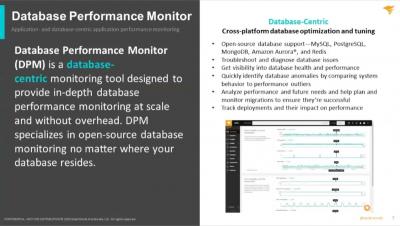
It’s important to be able to look at the entirety of your application architecture, not just specific aspects of it, and understand how different parts connect. Observability comes first, followed by monitoring. In this post, we’ll dive into the database part of your architecture to show how you can monitor and optimize your database performance.
Our friends at Buoyant, creators of Linkerd, have just launched the public beta of Buoyant Cloud, the best way to run Linkerd in mission-critical environments. We're happy to announce that Civo users are eligible for $100 in free Buoyant Cloud credits. Read on to learn more!
Microsoft has discovered a new large-scale attack targeting Kubeflow instances to deploy malicious TensorFlow pods, using them to mine Monero cryptocurrency in Kubernetes cluster environments. Kubeflow is a popular open-source framework often used for running machine learning tasks in Kubernetes. TensorFlow, on the other hand, is an open-source machine learning platform used for implementing machine learning in a Kubernetes environment.
June 29, 2021 by Amanda McGuinness of Ammeon Solutions and Marcel Weinberg It has been nearly 4 months since our previous v3.4.0 release and we’re super excited about this one! With Ubuntu 16.04 reaching end-of-life, we are pleased to announce support for Ubuntu 20.04 (Focal Fossa). We have also included lots of performance improvements in v3.5.0. See below, for further information on what’s included in the release.
When Logz.io was founded in 2015, we set out to simplify logging with the ELK Stack by delivering Elasticsearch and Kibana as a managed cloud service. But logs only tell part of the story – DevOps teams also need metric and trace data to better monitor the health and performance of their environment and quickly pinpoint the root cause of new problems. Importantly, using multiple tools to collect and analyze this data adds complexity and extra work.