Operations | Monitoring | ITSM | DevOps | Cloud

Sponsored Post

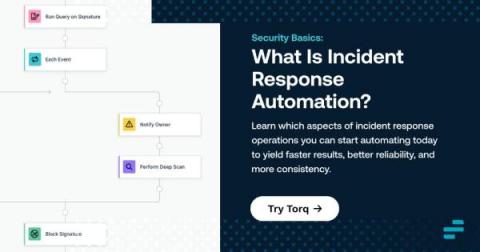
Security Basics: Incident Response and Automation

Incident response is one of the most challenging tasks that IT teams face. It's challenging not just because it typically involves many stakeholders and moving pieces, but also because teams usually face pressure to respond as quickly as possible. That's why investing in incident response automation is a wise choice. Although it may not be possible to automate every aspect of every incident response workflow, being able to automate at least the major elements of incident response will yield incident management processes that are faster, more reliable, and more consistent.Keep reading to learn about the components of incident response and which incident response activities to start automating.

User Journey Secure Variable Storage

We’re excited to announce that we now offer Secure Variable Storage for synthetic user journey scripting! If you have sensitive data that you wish to use in journey scripts then you can now store them in your account’s own encrypted vault. This is useful for data such as email addresses, passwords, usernames and API keys.

Monitoring the AVD Broker

A legacy way to deploy applications and desktops on Azure was often to put some Server 2022 VMs (Virtual Machines) in Azure running the standard RDS (Remote Desktop Services) roles – session hosts, brokers, gateway etc. and then pay the compute costs for your session hosts, brokers, and gateways, set up a public IP address and open ports.

Canonical works with NVIDIA and BT to unlock infrastructure scalability for data scientists, technical and creative professionals

Ubuntu KVM — an industry-leading hypervisor — extends its reach to AI/ML applications and graphics-intensive applications with native support for NVIDIA virtual GPU (vGPU) software products, including NVIDIA Virtual Compute Server (vCS) and NVIDIA RTX Virtual Workstation (vWS). Canonical has been working closely with NVIDIA to ensure frictionless integration and a best-in-class user experience.

Tips and Tricks for the Small SOC: Part II

It’s Cybersecurity Awareness Month, and in that spirit, we’re offering a number of tips and tricks small security operations center (SOC) teams can use. I started my career working as part of a small SOC team, and working with other security experts here at Logz.io, we’re happy to offer these to small SOC teams who can often use all the help they can get! In the last post, we talked about managing security talent and building processes.

How to change the Tiering of Azure Blobs

In this blog post, I will show you how easy it is to move a single Azure Blob or even select mutlipe or the complete container and move those blobs from any storage tiering to another with just a few clicks. There are cost benefits moving your Azure Blobs down to a lower Storage Tier, Hot being the most expensive, with a cool a little bit cheaper, and the Archive Blob Tier having the lowest cost option. For most Azure Storage Cost saving ideas, we cover some in another blog.

How AIOps enhances operational efficiency

Digital data is everywhere, and its sheer volume and ambiguity often make it challenging for us humans to analyze. That’s why we use a special branch of AI called artificial intelligence for IT operations (AIOps) to reveal the deeper structure of copious data. AIOps sits at the intersection of big data and machine learning to improve the efficiency of IT operations.

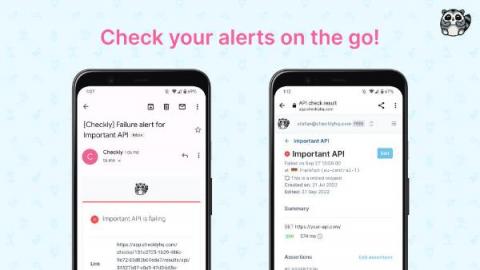
Checkly Alerting Improvements and Our New Slack Community

Welcome to day one of our very first Launch Week! In the upcoming days, we’ll release new features every day. We’ll share new alerting capabilities, unlock the power of Playwright, and will talk about new ways to control and write your Browser checks. It’ll be a nice feature and improvements mix, trust me! To kick things off, let’s have a look at what’s new in the world of monitoring and alerting.

What's New in Checkly Launch Week

The Checkly development team is continually improving our platform and user experience, and we’re excited to unveil some new features that we’ve been working on during our first ever Checkly Launch Week. From October 11th through 14th, we’ll be announcing and discussing our latest innovations, new features, functionality, and capabilities for users every single day of the week.

10 Future Alternative Methods of Data Storage That May Change the Cloud for Good

By 2025, it's expected that the amount of data produced per day will be 463 exabytes. 1 exabyte is 1 million terabytes or 1 billion gigabytes—that's a lot of data! Safely storing data ensures that all the knowledge you gather over the years is retained and maintained. Proper storage is super vital for all individuals, businesses, and other organizations. There are many ways to store data, from old-fashioned paper records to modern digital methods.