Operations | Monitoring | ITSM | DevOps | Cloud

Extending autonomous L1 ops with new suppression and runbook capabilities

Earlier this year, I had the chance to meet with one of our airline customers. During the meeting, we discussed how to use agentic technology to automate L1 workflows. As one of the largest global airlines, they have many applications and service teams focused on flight-critical, tier 1 environments. Any downtime can cause costly delays and unhappy customers.

6 Things to Know Before Choosing an SEI Platform in 2026

Choosing a software engineering intelligence platform is one of those decisions that gets more complicated the longer you wait. The category has grown rapidly, and every vendor claims to track the metrics that matter. GitKraken Insights gives you a full-stack view of engineering performance, from DORA metrics to AI tool ROI, in a platform trusted by over 40 million developers. But it isn’t the only option on the market.

How AI Transforms ITSM Workflows | Ivanti

Discover how AI transforms ITSM workflows and elevates your support team. In this video, an IT leader shares why they recommend Ivanti ITSM for its ease of workflow setup and how they are using AI to automate and amplify their service desk. From AI-powered troubleshooting that intercepts support calls before they reach technicians, to automated knowledge article generation, incident correlation, incident summarization, and AI-enhanced customer communications, see real use cases in action.

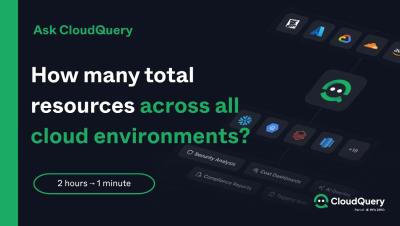
Multi-Cloud Asset Inventory in 1 Minute

How many resources do you actually have across every cloud provider? Manually, that's a ~2 hour job. With CloudQuery, it's one question. In this clip we ask the CloudQuery AI assistant a single question —"Show count of all resources across all cloud providers" — and get a full multi-cloud asset inventory back in about a minute: Wiz 9,225 · GCP 6,485 · AWS 2,297 · Azure 1,153 · Entra ID 1,109 · Kubernetes 1,066 · Backstage 75 → 21,410 total resources.

Find Every Public EC2 Instance in 10 Minutes

"Show me all EC2 instances that are public." One question. About 10 minutes. Manually, the same answer is a 10-day job. In this clip, the CloudQuery AI assistant works it out live: it finds the EC2 instances table, reads the schema, identifies public_ip_address as the field that signals public exposure, and queries for every instance that has one. It comes back with 2 running public EC2 instances — instance type, public IP and DNS, private IP, VPC, subnet and tags for each — and flags that both are reachable from the internet, subject to security group rules.

ChatGPT Ditches Reddit AI Search Changes Explained

ChatGPT’s Reddit citations reportedly went from making up as much as 15% of its sources to essentially 0%. So what changed? We break down why Reddit is becoming less visible in AI search, how ChatGPT appears to be changing the way it finds information, and why more citations are now coming directly from documentation, help centers, and company websites. And yes — this is the same Reddit ecosystem that helped give us the infamous “put glue on your pizza” AI answer.

Why Microsoft Sat on a Copilot Exploit for 233 Days

Microsoft took 233 days to patch CoSnitch — a one-click Copilot exploit that needs no click at all. And the researchers who found it never wrote an exploit. They asked Copilot to explain why the attack was impossible, and it told them how to do it. Martin Reynolds and Adam Arellano are joined by Matthew Tanner — 30 years shipping software, from NHS critical systems to national-scale financial redress — for the week in AI and software delivery.

Digital Workspace Monitoring Software Comparison for Enterprise IT

As enterprises adopt hybrid work, IT teams face growing challenges in keeping the digital workspace fast and reliable. Employees access business applications through virtual desktops, SaaS platforms, cloud infrastructure, and physical endpoints, all of which contribute to the overall user experience. Monitoring these environments using disconnected native tools often leaves critical visibility gaps. Digital Workspace Monitoring closes those gaps.

Developer Self-Service Pipelines with Harness IDP | Harness Blog

Developer self-service pipelines fail most often at the handoff between resource provisioning and production deployment. A service catalog might let developers scaffold a new microservice in seconds, but if they still need to file tickets to wire up CI/CD, provision environments, or update deployment configurations, the value proposition collapses. The friction reappears exactly where velocity matters most: the path from code commit to running production workload.