Operations | Monitoring | ITSM | DevOps | Cloud

Upgrade Alert: Test Your Internal Infrastructure with Enhanced Private Location Monitoring

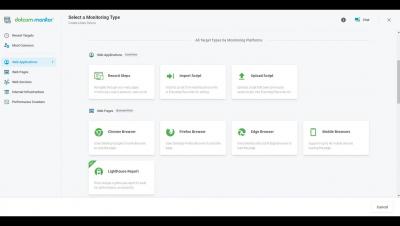
External servers need to be monitored but it’s your backend infrastructure that supports them. Looking for a reliable way to monitor your internal networks? You’re in luck! Uptime.com Private Location monitoring is just the tool for you.

3 ways Managed Services Providers can offer more value

For many businesses, using a Managed Services Provider (MSP) makes sense, particularly when it comes to database management, monitoring and security. They can control costs while still having access to expert resources, and dial up or down the service as required. It’s perhaps no surprise then that 47% of people surveyed in the Channel Futures 2020 MSP 501 Report identified professional services as a growth area, 51% identified enhanced network monitoring, and 85% identified security services.

What is Software Asset Management (SAM)? Why is it important?

With organizations relying increasingly on software applications that they use, it is critical to understand what software applications you have, who are making use of them, how are they supported, and what is the cost associated with them. Software asset management (SAM) practices that are well-developed and well-understood are the key to maximizing the value from your software assets.

CI/CD Pipeline: A Quick Guide

Fast and reliable build pipelines are crucial to the success of modern day engineering teams. Check out this quick guide that can help DevOps/SRE teams to streamline the integration of development and testing processes through CI/CD tools. All software companies are committed to providing services that are useful, appreciated, and shared. Therefore, it all boils down to delivering reliable software to users and consumers.

Top 10 Java Linters

If you want to ensure code maintainability over the long term, you should follow best coding practices and style guide rules. One of the best ways to achieve this, while also potentially finding bugs and other issues with your code, is to use a linter. Linters are best described as static code analyzers because they check your code before it even runs. They can work inside your IDE, run as part of your build process, or be inserted into your workflow anywhere in between.

How to Perform HTTP Requests with Axios - A Complete Guide

One of the most typical things a developer does is make an HTTP call to an API. An API request can be sent in a variety of ways. We can use a command-line tool like cURL, the browser's native Fetch API, or a package like Axios to accomplish this. Sending HTTP requests to your API with Axios is a fantastic tool. Axios is supported by all major browsers. The package can be used for your backend server, loaded via a CDN, or required in your frontend application.

Beginner's Guide To Learn SCSS

Back in the day, frontend development was all about writing CSS, HTML, and JavaScript. However, it is no more the case. Now it has become much more complex and interesting than earlier. In addition, the e-commerce industry is evolving continuously, making frontend developers stay at par with the latest frontend technologies to create and build efficient and highly optimized websites for their businesses. In today’s article, we will see a definitive guide to SCSS, what it means and how to use it.

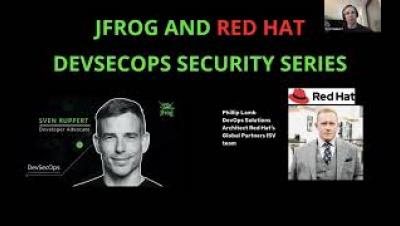
JFrog And Red Hat DevSecOps Security Series

Accurately detecting and mitigating security vulnerabilities is critical for any enterprise. JFrog’s ongoing collaboration with Red Hat provides the DevOps community with enterprise-grade DevSecOps capabilities, enabling you to deliver high-quality, and more secure software, anywhere. As part of the Red Hat DevSecOps Security Series, Join us on July 1st for JFrog & Red Hat’s perspective on application analysis and how JFrog’s recently achieved Vulnerability Scanner Certification helps identify vulnerabilities in applications, images and configurations early in your lifecycle.