Microsoft Teams Integration with ServiceDesk Plus
Learn how to configure #MicrosoftTeams with ServiceDesk Plus, and leverage the collaboration app from Microsoft as an additional channel for IT and enterprise support.


Wake on LAN(WOL) has been a go-to solution for most network admins to ensure an uninterrupted IT resource. Aiding in remote booting of wired and wireless networks, WoL helps optimize energy usage even as it ensures your network resources are readily available. Enabling you to boot your machines on demand, and switch them to a low power mode when not in use, WoL saves you hefty power bills and helps you avoid the time-consuming manual task of restarting your network devices physically.
Networks are rapidly becoming larger and more complex, with numerous different technologies playing into their expansion. Network mapping is increasingly important for network administrators tasked with handling these growing networks. Network mapping provides network admins with a visual map so they can check network performance, the status of connected devices, monitor the network, and analyse networks before initiating troubleshooting efforts.
Monitoring the performance of server infrastructure is crucial to any organization. While metrics such as health and availability will sometimes suffice for measuring overall efficiency, getting visibility into more details, such as the underlying processes, tasks, and scheduled jobs, is often crucial for not just identifying a performance problem but also isolating its root cause.
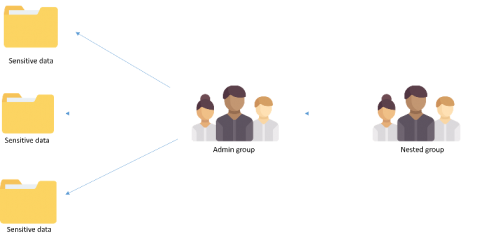
Security groups either make or break your IT security. Group memberships are responsible for administrative access in your your network and define access to other privileged resources and data on your domain. Ever wondered how a simple misconfiguration of a group membership could lead to a security incident? This blog elaborates the most common misconfiguration or security loopholes that can cause damage to the sensitive data in your network.
AI and analytics are playing critical roles in driving innovation among many businesses riding the digital transformation wave during this pandemic. Many business leaders realize that people are not wired to think exponentially, but incrementally in a linear world, unable to see the ripple effects of their actions. The pandemic has highlighted the enormous impact this has on the quality of decisions made, especially in the context of business.
One of the lasting changes brought about by the COVID-19 pandemic is that it forced organizations to rethink the concept of a workspace. As remote work became inevitable, IT teams had to enable the secure transition to remote work almost overnight. Opening up offices, on the contrary, will likely be executed in planned phases. A United States Department of State advisory recommends that workforces return to an office in three phases, with the employees most at risk coming in at a later stage.
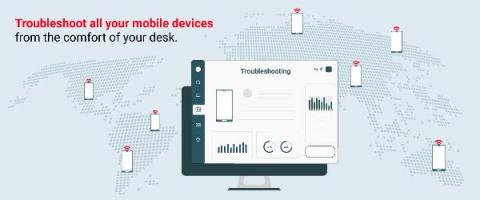
System administrators play a vital role in every organization’s IT department, and one of the key responsibilities they have is to troubleshoot employees’ devices in case of device issue or malfunction to prevent loss of productivity. With employees working from remote locations, especially now during the pandemic, troubleshooting can be challenging without the device being physically present.