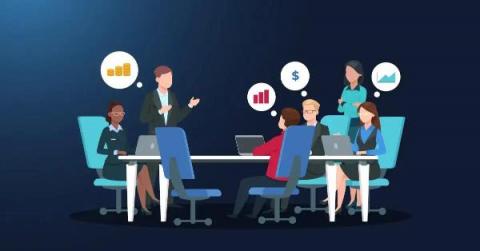
NOC, or network operation center, processes have been set in stone for decades. But it’s time for some of these processes to evolve. Digital transformation and the cloud era have led to the rise of DevOps, and with it, service ownership. Service ownership means that developers take responsibility for supporting the software they deliver at every stage of the life cycle. This brings development teams closer to their customers, the business, and the value they deliver.
There are many computing resources used in different cloud application services to provide online software-as-a-service (SaaS). SaaS differs from traditional applications in that it works from a cloud computing environment. This means that both the application service as well as user data are being hosted by a cloud provider in the cloud. Therefore, the SaaS and data are accessible from anywhere as long as there's online access. This model provides a distinct advantage from a software perspective.
We’ve reached the point where our ability to collect data has actually exceeded our ability to process it. Nowadays, it’s commonplace for organizations to have terabytes or even petabytes worth of data sitting in storage, waiting patiently for well-intentioned systems admins to eventually analyze it.
Modern data centers are complex environments that often contain many thousands of individual cabling and port components. When the physical connectivity infrastructure is not properly organized, tracked, and managed, you can quickly run into serious problems.
Five worthy reads is a regular column on five noteworthy items we’ve discovered while researching trending and timeless topics. In this edition, we’ll learn what brain-computer interfaces are, their crucial medical applications, and the ethical challenges they pose.
It’s that time of the year again and peak season 2022 feels different. With supply chains and global economies in flux, businesses have a lot to consider. Shipping woes are subsiding in many areas – consider that a year ago, the queue at the Port of Long Beach, California was approaching a peak of 110 vessels, down to eight freighters in September of this year. East coast ports in the US and others around the globe are seeing rising tides.
Laws vary by state. That’s expected. Fairbanks, Alaska, enacted a law prohibiting the provision of alcoholic beverages to moose, so don’t even think about it. In a part of Washington State, good luck trying to kill Bigfoot. (Not because Bigfoot doesn’t exist, but specifically because it’s illegal per a 1969 law.) But what happens when state-specific regulations are used to address a topic that transcends geographic boundaries like, say, the internet?