Operations | Monitoring | ITSM | DevOps | Cloud

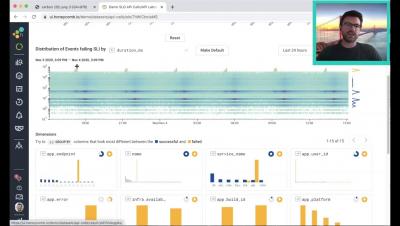
Empower your Organization's IT with Improved Monitoring Visibility

As technology evolves so do the needs of an organization that rely upon it; the ability to quickly adapt has become more important than ever, especially as of late. However, this doesn’t mean that adopting new technology isn’t without its own set of challenges. Take operating in the cloud for instance; one of the trade-offs is visibility.

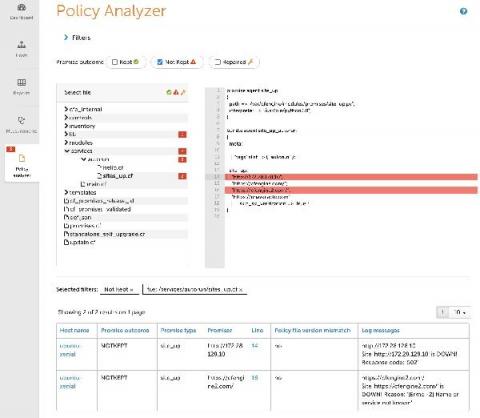
Custom promise outcomes in Mission Portal

CFEngine 3.17.0 introduced custom promise types, which enable CFEngine users to extend core functionality and policy language in a simple way. As an example of the power and simplicity of this new feature, I will show a promise type that helps to observe a website’s status. The module which implements this promise type was written in a couple of hours.

Set up a CI/CD Pipeline with Cloud-Native Tools

The adoption of cloud-based solutions has become increasingly common. The proof for this is evident – according to Gartner, Inc., the worldwide public cloud services market is expected to grow by 6.3% in 2020, up to a staggering $257.9 billion in value. The Flexera 2020 State of the Cloud Report, released on April 28, 2020, states that more than 90% of respondents have adopted cloud computing, with the top three cloud service providers being – AWS, Azure, and Google Cloud Platform.

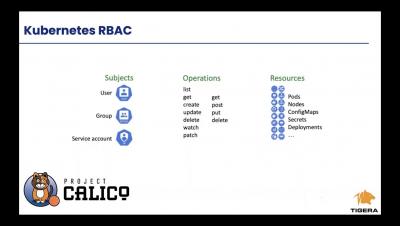
Enterprise Security Controls for Kubernetes

In this talk, we will explore how to meet common enterprise security control needs when running Kubernetes. We will look at a range of common enterprise security needs and how you can meet these with standard Kubernetes primitives and open source projects such as Calico, or take it a step further with the additional features of Calico Enterprise.

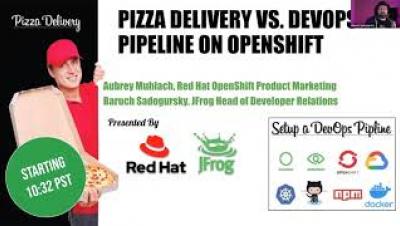
JFrog & RedHat - Pizza Delivery vs. DevOps Pipeline On OpenShift

In this webinar, Baruch Sadogursky of JFrog and Aubrey Muhlach of Red Hat will demonstrate the ease of supporting DevOps with a fully-fledged pipeline in a cloud. From source control, CI server, artifact repository, security vulnerability and license compliance scanner, Docker registry, Helm repository... all the way to runtime, with OpenShift, tracing and monitoring tools. We mean EVERYTHING! So, by using the K.I.S.S. principle (keep it simple) applied to a bunch of SaaS tools, we can create an entire DevOps pipeline in 30 minutes or less! Or can’t we?