The Digital Operational Resilience Act (DORA) is set to significantly impact the financial sector. Coming into full effect in 2025, this EU regulation will set new standards for information and communications technology (ICT) risk management. In this landscape, how can financial firms ensure they’re not only compliant, but also operationally resilient?
The financial and operational ramifications of downtime have become increasingly pronounced over the past seven years. In 2014, Gartner predicted that downtime costs organizations an average of $300,000 per hour. However, recent statistics lie in sharp contrast to this 6-figure estimate, with 44% of organizations now counting their hourly downtime costs at over $1 million - exclusive of the ensuing penalties or legal fees.
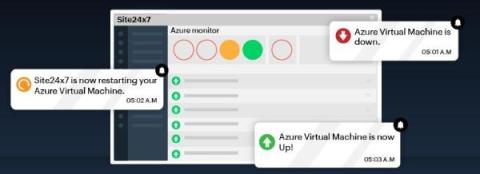
The transition from traditional on-premises IT infrastructure to the public cloud has brought substantial relief to IT decision-makers and sysadmins. Since many organizations use Microsoft Windows as their preferred operating system, Microsoft Azure has become the public cloud provider of choice automatically owing to a familiar GUI and Active Directory sync.
Distributed systems, such as modern microservices-based applications, are highly scalable, but also highly complex. Dependencies and unexpected interactions between services are a common cause of incidents, and these incidents are also notoriously hard to test for. xk6-disruptor — an extension that adds fault injection capabilities to Grafana k6, the open source reliability and load testing tool — can help overcome these challenges.