Operations | Monitoring | ITSM | DevOps | Cloud

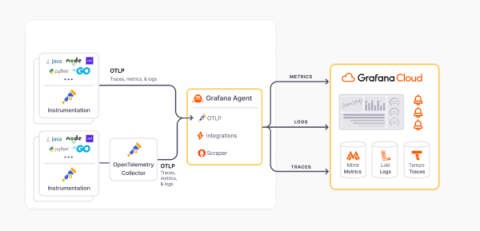
Send Lambda traces to Grafana Cloud with OpenTelemetry

AWS’s serverless technologies are popular because they provide cost effective scaling and great separation of concerns. However, observing serverless architectures like Lambda is challenging due to their transient nature and abstracted infrastructure. Unlike traditional systems with consistent hosts, serverless functions are ephemeral, often scaling rapidly and operating in isolation.

SmartNICs in telco: benefits and use cases

In our previous blog, we introduced smartNICs as technology enablers for next-generation converged data centres. We covered how smartNICs can increase efficiency and drive return on investment. In this blog post, we explain how this innovative technology can help the telecom industry. SmartNICs use cases for the telecom sector are still emerging. However, when they arrive, it will be big for the sector, especially at edge clouds where speed in user plane packet processing matters the most.

The Debrief: Build vs buy

Almost every organization around will eventually face an important crossroad: should I build the tooling I need, or buy it? But more often that not, the decision to buy is the most sensible one that'll save you the most time, effort, and even money. But there are some edge cases where building can be the right choice. In this chat with Isaac, product engineer at incident.io, we dive into this nuanced debate and explain why buying is your best bet...most of the time.

Dependency Redundancy Groups in Icinga 2.14

Icinga 2.14 introduced a new feature that allows to better model complex dependencies between your hosts and services: redundancy groups. Let’s take an e-mail server as an example. In order to deliver outgoing messages, it has to look up the addresses of the destination servers and relies on DNS for doing so. For incoming messages, it has to know which accounts exist and in a corporate environment, this typically means looking up user accounts in a directory service like LDAP.

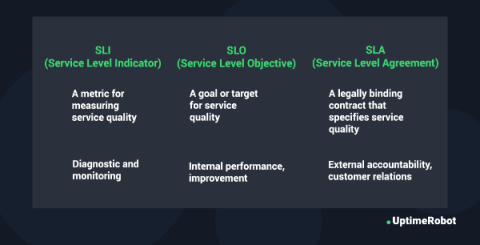
SLA vs. SLO vs. SLI: What's the Difference?

When it comes to managing services effectively, terms like SLA, SLO, and SLI are often thrown around like confetti at a parade. They’re in meetings, in documents, and even in casual office conversations. But if you’re new to the field or simply haven’t had the chance to dig into these acronyms, they can feel like a bewildering alphabet soup. And they can’t be missing on an uptime monitoring blog such as ours! So, what do these terms really mean?

Network Segmentation: Definition and Key Benefits

In the ever-evolving landscape of network security, the challenges faced by Managed Service Providers (MSPs) and technical managers are multifaceted, and the need for robust security measures becomes paramount. Amidst this backdrop, network segmentation remains a pivotal strategy. This article delves into the intricacies of network segmentation, its significance, and a roadmap to its successful implementation.

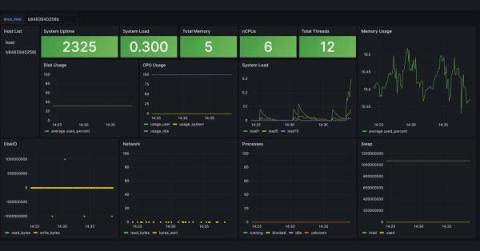
Getting Started with Infrastructure Monitoring

This article was originally published on The New Stack and is reposted here with permission. By taking advantage of monitoring data, companies can ensure their infrastructure is performing optimally while reducing costs. While building new features and launching new products is fun, none of it matters if your software isn’t reliable. One key part of making sure your apps run smoothly is having robust infrastructure monitoring in place.

A Vicious Cycle: Data Hidden Behind Lock and Key

Understanding production has historically been reserved for software developers and engineers. After all, those folks are the ones building, maintaining, and fixing everything they deliver into production. However, the value of software doesn't stop the moment it makes it to production. Software systems have users, and there are often teams dedicated to their support.