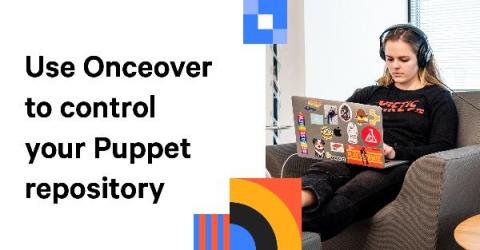
I am a Puppet beginner and I’m happy to make the code manager integration happen. I like to play around with my code and test my code changes on my agent nodes. However, the way I’m testing my code is a bit tedious: Save my code change, push into remote repo, run code deploy, and run Puppet on agents. Is there a simple way to quickly test my code? Yes! The answer is using Onceover.
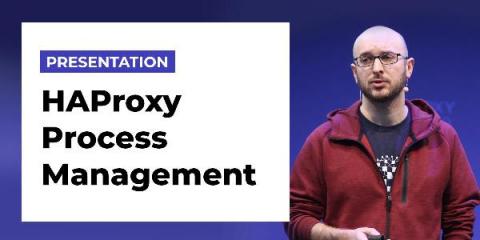
In his HAProxyConf 2019 presentation, William Lallemand (Senior HAProxy Developer) shows how process management in HAProxy has evolved since the beginning of the project; With the advent of systemd, new techniques had to be developed so that users could reload HAProxy safely. The Master-Worker mode simplifies the management of HAProxy processes and introduces interesting features.
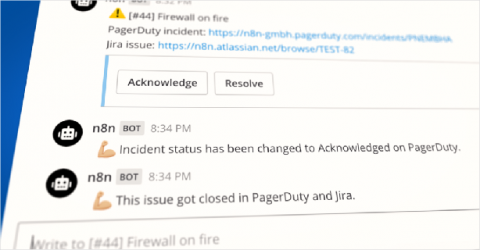
Tanay is the Head of Developer Relations at n8n. He has published books on WebVR, virtual assistants on Raspberry Pi, and FirefoxOS. He has been listed in the about:credits of the Firefox web browser for his contributions to the different open source projects of the Mozilla Foundation. I’ve been involved in the DevOps world for a while and yet I finished reading The Phoenix Project only recently. The book piqued my interest in how teams execute their incident response playbooks.
Open-source software started around the millennium and is now one of the cornerstones of modern software development. Open-source projects make their source code available to anyone so that engineers across the world can inspect the code to find bugs or make changes to suit their needs. Today, there are more than 180,000 open-source projects available, according to Wikipedia. We at StackState are big believers in open-source software.
Choosing between blade servers or those intended to go installed in a rack is a small headache that is repeated daily in the complex minds of technicians around the world. What configuration to choose? What can best serve my installation? These are questions that are repeated while they pull out their silvery and silky hairs.
Application performance monitoring (APM) and logging both provide critical insight into your ecosystem. When paired together with context, they can provide vital clues on how to resolve problems with your applications. As the log data you analyze becomes more complex, navigating to the relevant pieces can be tricky using traditional tools. With Elastic Observability (powered by the Elastic Stack), correlating logs with APM is as simple as a few clicks in Kibana.
“If it’s not in Salesforce, it didn’t happen.” You’ve undoubtedly heard it, or perhaps you’ve said it yourself. And why not? Over the past 15 years, Salesforce has redefined the CRM industry, becoming the de facto solution for managing sales, customer service, marketing automation, and analytics functions with its cloud-only approach. As Salesforce’s solutions have expanded so has their user base.