As an industry analyst at Gartner, we would often discuss whether people were in a centralized or decentralized cycle. In business, it’s normal to investigate options for creating innovation and moving quickly, or focus on reducing cost and optimizing teams and technologies.
Microsoft Teams users, whether they use peer-to-peer calls, meetings, or PSTN Telephony very often switch from their laptop to their mobile and expect reliable call quality on all devices. Monitoring and ensuring call quality for Microsoft Teams users, in general, is already challenging at times. But when it comes to Microsoft Teams mobile calling, there is added complexity for IT teams.
It is no secret that for IT teams, troubleshooting Microsoft 365 or Microsoft Teams issues takes time, and more often than not, the culprit is not even Microsoft.
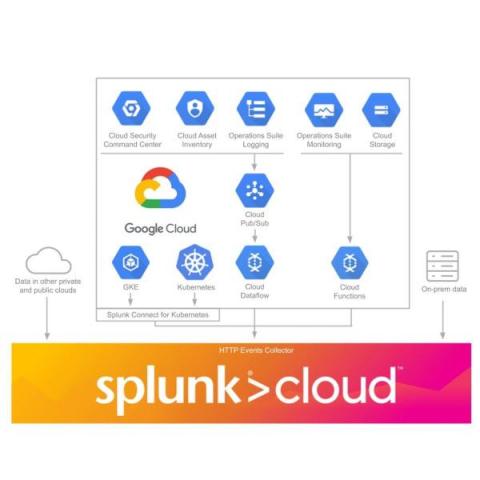
In April 2021, Splunk launched Splunk Cloud on Google Cloud. Since then, a large and growing number of integrations, applications, tools, and solutions have been created to enable or enhance use cases across data protection, productivity, safer remote working and other security visibility needs. We’ve highlighted a few of the more noteworthy additions below for any current or prospective users of Splunk Cloud on Google Cloud.
Data center capacity refers to key data center resources (i.e., power, space, cooling, and power/network port connections) that are available to meet the requirements of current and future IT demand. Accurately planning and managing data center capacity is essential for maintaining uptime and increasing efficiency. Failure to do so can be very expensive and detrimental to the business.
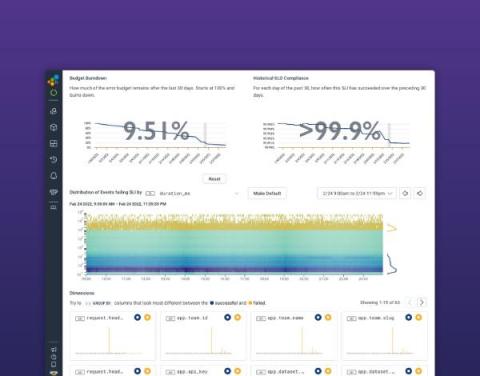
Dashboards are one of the most basic and popular tools software engineers use to operate their systems. In this post, I'll make the argument that their use is unfortunately too widespread, and that the reflex we have to use and rely on them tends to drown out better, more adapted approaches, particularly in the context of incidents.