An Introduction To AWS CloudFront Functions
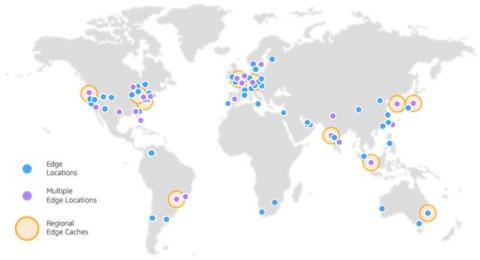
CloudFront Functions allow you to deploy serverless JavaScript functions to AWS' network of edge locations to be executed as close as possible to end-users. This article will get you started.


CloudFront Functions allow you to deploy serverless JavaScript functions to AWS' network of edge locations to be executed as close as possible to end-users. This article will get you started.
It’s been a dynamic few years for healthcare, to say the least. The entire sector has been under immense pressure – not just for the clinical staff on the front lines but also for personnel behind the scenes. The rapid expansion of telehealth and remote work, ongoing application upgrades and refactoring, mergers and acquisitions, revenue pressure due to delayed procedures, staffing challenges of all kinds… All have had an impact on satisfaction and overall experience.
Modern enterprise and SME networks are complex constructions. They comprise on-premises network equipment and servers, multiple public cloud infrastructure components, operational technology links to monitor physical items, edge networks, and large numbers of endpoint devices that connect from various locations over many different networks.
Healthcare facilities have a lot of assets and pieces of equipment and nowadays technologies in all areas of the health industry are improving. However, several healthcare facilities still manage assets manually. When you manage assets manually it becomes more hectic and complex because. In the healthcare industry, there are lots of assets and inventory to manage. This is where CMMS software comes into play. What exactly is CMMS software?
DevOps culture revolutionized our industry. Continuous Delivery and Continuous Integration made six sigma reliability commonplace. 20 years ago we would kick the production servers and listen to the hard drive spin, that was observability. Today’s DevOps teams deploy monitoring tools that provide development teams with deep insight into the production environment. Before DevOps practices were commonplace, production used to fail. A lot.
Server and IT infrastructure monitoring are critical to ensuring the performance and longevity of your client systems. Even more so, remote monitoring technology, in particular, has helped define the entire modern IT industry. In this post, we’re going to discuss several of the main monitoring concepts, including metrics, alerting, and monitoring, and why they are important.
There’s little doubt that a lot has changed when it comes to network design, specification and build. The seemingly simple goal of carrying traffic from point A to point B might remain, but these days it comes with a long list of options and alternatives to cover a wide range of network architectures, content providers and service types, all of which might have different requirements for bandwidth, latency, and availability.
I am excited about the upcoming Optical Fiber & Communications (OFC 2022) Conference in San Diego for several reasons. Not only will it be the first in-person conference that I have attended in more than two years due to the pandemic, but the thing that I am most excited about is the fact that Ribbon will be showcasing our new IP Wave offering at the show.
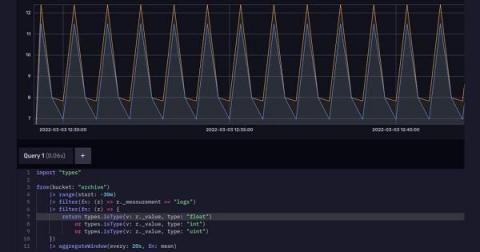
As a strictly typed language, Flux protects you from a lot of potential runtime failures. However, if you don’t know the column types on the data you’re querying, you might encounter some annoying errors. Suppose you have a bucket that receives regular writes from multiple different streams, and you want to write a task to downsample a measurement from that bucket into another bucket.