Operations | Monitoring | ITSM | DevOps | Cloud

The latest News and Information on Distributed Tracing and related technologies.

Debugging, distributed tracing, and profiling for web applications

Google Cloud offers many tools that can help you manage your application services. In this video, we teach you how to set up and utilize Cloud Trace, Cloud Profiler, and Cloud Debugger to collect latency data across different services, memory-allocation information, and inspect application code locations without compromising the performance of your web application.

NodeJS Instrumentation - Adding Custom Tags to Spans | Datadog Tips & Tricks

In part 1 of this 4 part series, you’ll learn how to use manual instrumentation to add additional detail to traces. We’ll add new tags, or attributes, to the spans generated by our NodeJS application, allowing for more insightful data visualizations in App Analytics.

NodeJS Instrumentation - Creating Custom Spans for Method-Level Visibility | Datadog Tips & Tricks

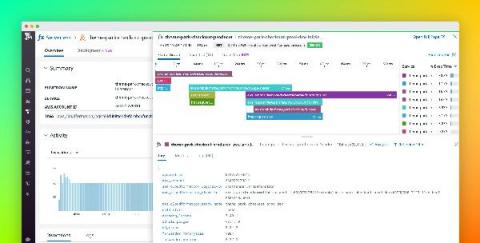
In part 2 of this 4 part series, you’ll learn how to instrument your NodeJS application to capture custom method-level spans, allowing visibility into how specific methods behave in your application. Flame graphs allow for deep insight into the performance of your code. During instrumentation, we can capture custom spans for deeper layers of visibility in the resulting flame graphs. In this video, we use instrumentation to capture a method-level span, allowing us to see the performance of that specific method in our flame graphs in the Datadog UI.

Jaeger Turns Five: A Tribute to Project Contributors

August 3rd, 2015 was the date of the first commit in the internal Jaeger repository at Uber. Technically, the true birthday of the project was probably a week or so earlier, because while I was prototyping the collector service we went through a number of project names, some of them rather embarrassing to name here, and the real first commits happened in a differently named repository.

Introducing the Sumo Logic Observability suite with distributed tracing (beta) - a cornerstone of cloud-native APM

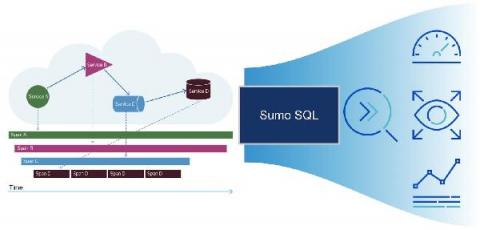
Last week Sumo Logic announced our new Observability Suite, which included the public introduction of the closed beta for our distributed tracing capabilities as part of our Microservices Observability solution. This new solution will provide end-to-end visibility into user transactions across services, as well as seamless integration into performance metrics and logs to accelerate issue resolution and root-cause analysis. In this blog, we’ll explore the new solution in detail.

Jaeger Essentials: Best Practices for Deploying Jaeger on Kubernetes in Production

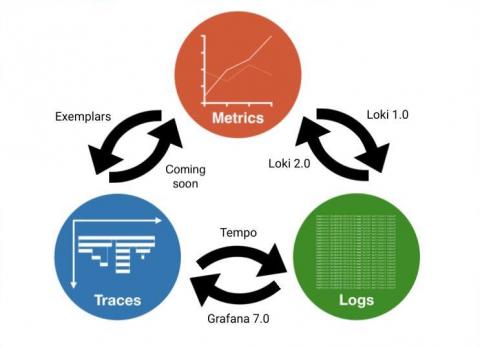
Logs, metrics and traces are the three pillars of the Observability world. The distributed tracing world, in particular, has seen a lot of innovation in recent months, with OpenTelemetry standardization and with Jaeger open source project graduating from the CNCF incubation. According to the recent DevOps Pulse report, Jaeger is used by over 30% of those practicing distributed tracing.

Where did all my spans go? A guide to diagnosing dropped spans in Jaeger

Nothing is more frustrating than feeling like you’ve finally found the perfect trace only to see that you’re missing critical spans. In fact, a common question for new users and operators of Jaeger, the popular distributed tracing system, is: “Where did all my spans go?” In this post we’ll discuss how to diagnose and correct lost spans in each element of the Jaeger ingestion pipeline.

How to maximize span ingestion while limiting writes per second to Scylla with Jaeger

Jaeger primarily supports two backends: Cassandra and Elasticsearch. Here at Grafana Labs we use Scylla, an open source Cassandra-compatible backend. In this post we’ll look at how we run Scylla at scale and share some techniques to reduce load while ingesting even more spans. We’ll also share some internal metrics about Jaeger load and Scylla backend performance. Special thanks to the Scylla team for spending some time with us to talk about performance and configuration!