Operations | Monitoring | ITSM | DevOps | Cloud

Real-Time Energy Management with InfluxDB and eSoftLink IoT Platform

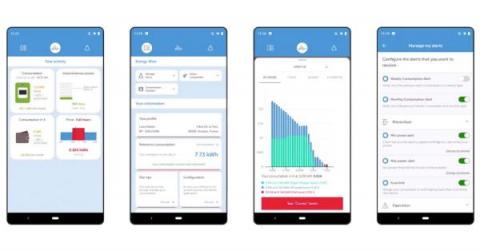
Smart energy IoT platforms are empowering consumers to track energy usage and even control spend based on their next bill’s forecast. Yet eSoftThings, a specialist in the Internet of Things (IoT) and artificial intelligence (AI), set out to push smart energy management even further, for both consumers and utility companies, through its IoT platform eSoftLink.

How to monitor Hadoop with OpenTelemetry

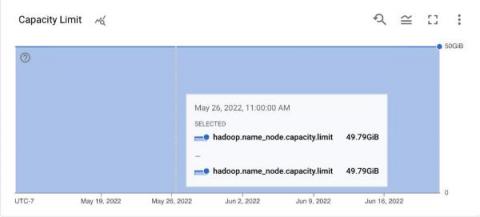
We are back with a simplified configuration for another critical open-source component, Hadoop. Monitoring Hadoop applications helps to ensure that the data sets are distributed as expected across the cluster. Although Hadoop is considered to be very resilient to network mishaps, monitoring Hadoop clusters is inevitable. Hadoop is monitored using the JMX receiver. The configuration detailed in this post uses observIQ’s distribution of the OpenTelemetry collector.

TL;DR InfluxDB Tech Tips: Migrating to InfluxDB Cloud

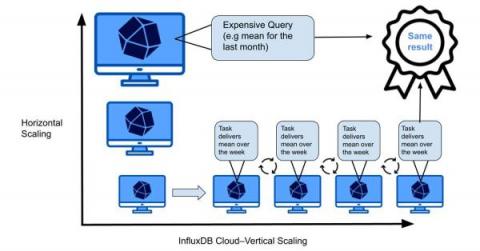
If you’re an InfluxDB user you might be considering migrating your workload to InfluxDB Cloud. You probably want to free yourself from the responsibilities associated with managing and serving your OSS account. Perhaps you are finding that you simply cannot scale your OSS instance vertically to meet your needs. Maybe you want to use all of the Flux functions that are available to you in InfluxDB Cloud.

What Are Unit Economics and How Are They Calculated?

Cloud spend is a significant line item in every company’s IT budget, and controlling it is especially important in today’s challenging economic climate. A steep decline in share prices, valuations, and a slowdown in venture capital funding have led CEOs to cut costs within their large line items, reduce their workforce, and reevaluate their unit economics — especially their margin per customer. The question is, how many organizations know their margin per customer?

Building The Modern Data Stack

As almost 90% of organizations are executing on a multi-cloud strategy for migrating their data and analytics workloads to the cloud, the term “modern data stack” continues to gain more traction. A modern data stack is a suite of technologies and apps built specifically to funnel data into an organization, transform it into actionable data, build a plan for acting on that data, and then implement that plan.

The Return of the InfluxDB V1 Shell

The community has spoken and the demand was clear: “BRING BACK THE INTERACTIVE SHELL USED IN 1.X” So it’s back… It works with InfluxDB V2… and has some improvements. The interactive shell allowed users to write data and interactively query data using InfluxQL. For newer users, InfluxQL is the SQL-like query engine that was native to the first major version of InfluxDB.

The 5 Ws (and 1H) of InfluxDB Edge Data Replication

As more businesses generate and process data at the edge, the need to share data from edge nodes to a centralized cloud location increases. Replicating data from the edge to the cloud ensures consistency across an entire application and creates an uninterrupted historical record that preserves the critical context of time. Edge Data Replication (EDR) is a feature available in InfluxDB designed to address this challenge.