Cloudsmith CLI Overview
An overview of the Cloudsmith CLI, showing how to install, configure and some of the commands available.


The latest News and Information on Continuous Integration and Development, and related technologies.
We’ve added production instances in two new locations: US-WEST-2 (Oregon) and AP-SOUTHEAST-2 (Sydney). These are just the first of many, but together they deliver serious performance improvements for our customers around the globe.
For many companies today business success depends on quality efficient build, test and delivery processes. Development and deployment environments become complex very quickly, even for small and medium companies. A contributing factor to this complexity is companies’ adoption of microservices. This is where modern CI/CD solutions like CircleCI come in to help streamline these processes.
What distributed development teams need is this: A ‘single source of truth’ for software assets, one that is available to any team or individual, anywhere on the planet, whilst maintaining the highest levels of performance for all.
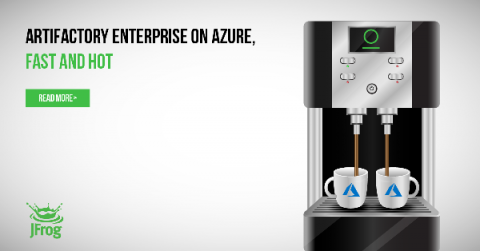
Some things, like high-end coffee or enterprise technology, are worth working and waiting for. But if you can get quality without the effort or delay, wouldn’t you? Installing or updating a self-managed (BYOL), High Availability edition of JFrog Artifactory hosted in an Azure VM can be a complex, and time-consuming process.
In times of crisis and challenge, the best in humanity comes out. We all want to help, we all want to pitch in and we all desire safety and health for our loved ones and communities. And we ideally want to assist genuinely – in a way that helps others without strings attached. JFrog is no different.
Jenkins is an open source, Java-based continuous integration server that helps organizations build, test, and deploy projects automatically. Jenkins is widely used, having been adopted by organizations like GitHub, Etsy, LinkedIn, and Datadog. You can set up Jenkins to test and deploy your software projects every time you commit changes, to trigger new builds upon successful completion of other builds, and to run jobs on a regular schedule.
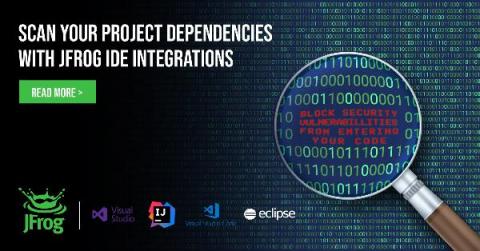
As continuous software deployments grow and become the accepted standard, security measures gain even more importance. From development and all the way through to production, security requirements should be adopted by all teams in an organization. JFrog IDE integrations provide security and compliance intelligence to the developer right from within their IDE.