New in Cloud Monitoring: Better tools for analysis, uptime checks, and alerts
We recently launched several new Cloud Monitoring features to improve your visualization and troubleshooting experience.


The latest News and Information on Cloud monitoring, security and related technologies.
We recently launched several new Cloud Monitoring features to improve your visualization and troubleshooting experience.
The State of DevOps Report finds a clear link between documentation quality and an organization’s ability to meet its performance goals.
Cybersecurity remains a key concern for any organization. The cost of cybercrime is expected to rise to $8 trillion in 2023 and reach $10.5 trillion by 2025. Various cybersecurity solutions are available, with Firewall as a Service (FWaaS) emerging as one of the most valuable assets when it comes to protecting your interests. We will investigate FWaaS solutions, how they work, how they're different from traditional firewalls, and what benefits they can provide for a range of organizations.
Implementing Azure DevOps can bring numerous benefits to your organization. The impact of Azure DevOps is felt across many aspects of the software development lifecycle, including planning, development, delivery, and operations.
We are delighted to be able to share that eG Innovations has become one of a very small number of partners to have achieved the AWS “Digital Workplace Competency” award following a lengthy and rigorous technical audit process. The designation differentiates eG Innovations, alongside EUC vendors such as Citrix and VMware, as having a solution that meets AWS’s own standards for enterprise software.
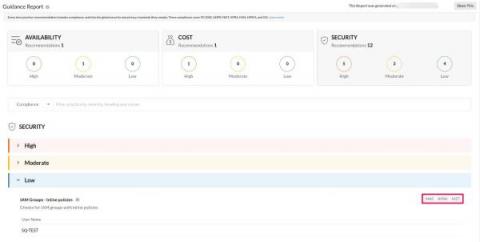
AWS Monitoring-Guidance report compliance checks As a business owner, you may experience lapses in the compliance and security checks in your AWS environment. With Site24x7 AWS guidance reports, businesses can ensure their deployments adhere to standards in cost, performance, and the security of their AWS environment and make informed decisions about how to optimize their cloud infrastructure.
Infrastructure performance management (IPM) is the process and associated tools for ensuring the overall health of your entire IT ecosystem so it operates at optimal levels. Because your infrastructure supports your entire enterprise—from daily operations to strategic initiatives—the stakes are high.
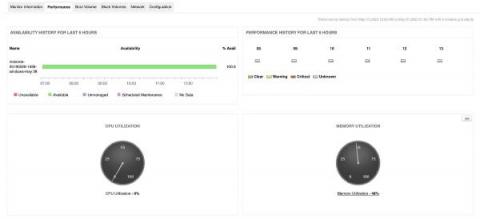
Applications Manager offers Oracle Cloud Compute monitoring that tracks the health, availability, and performance of your Oracle Cloud Infrastructure (OCI) instances. Applications Manager effectively enables DevOps teams to establish a secure and dependable environment for application development and deployment. Without an Oracle Cloud Compute monitor like Applications Manager, administrators would have to manually check each component of an instance to identify performance issues and rectify them.