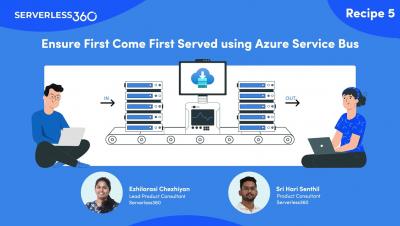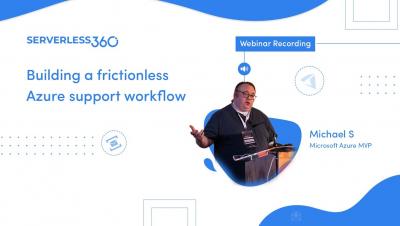
Building a frictionless Azure support workflow
In this webinar snippet, Michael Stephenson, Microsoft Azure MVP highlights Serverless360 capabilities to address the business challenges and empower the Microsoft Azure support team.


The latest News and Information on Cloud monitoring, security and related technologies.
AWS CloudWatch is a service that allows you to monitor and manage deployed applications and resources within your AWS account and region. It contains tools that help you process and use logs from various AWS services to understand, troubleshoot, and optimize deployed services. I’m going to show you how to get an email when your Lambda logs over a certain number of events.
Specifically intended for small and medium-sized companies seeking an all-in-one intelligent ERP solution that is simple to use, adaptable, and implemented in the cloud or on-premise, Dynamics 365 Business Central is a powerful and flexible solution. Deploying Dynamics 365 Business Central bring a lot of advantages for businesses that are ready for embracing digital.
Monitoring AWS Lambda performance plays a crucial part in your everyday AWS Lambda usage. Monitoring helps you identify any performance issues, and it can also send you alerts and notify you of anything you might need to know. The world is slowly getting to a point where machines and computers will be flawless, but until then, if we let them perform various tasks for us, we could at least monitor their performance.
In a recent survey of hybrid cloud decision makers, we uncovered a disconcerting trend. The vast majority of respondents reported that they are confident in their existing tools and capabilities for a whole host of activities necessary to manage cloud performance and spend … and yet they don’t have many of the tools that are actually needed to perform those tasks.
Students around the world are using FlashDrive to build research or studies projects and we love to see more and more each day using FlashDrive free tier to build education-related projects. We know that sometimes the Free tier is not enough to build big data project or simply projects that require a lot of dependencies or several micro-services working together.