The latest News and Information on Cloud monitoring, security and related technologies.
One important aspect of managing a cloud environment is setting up financial governance to safeguard against budget overruns. Fortunately, Google Cloud lets you set quotas for a variety of services, which can play a key role in establishing guardrails—and protect against unforeseen cost spikes. And to help you set and manage quotas programmatically, we’re pleased to announce that the Service Usage API now supports quota limits in Preview.
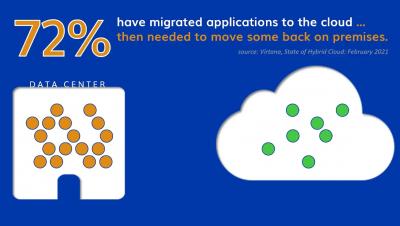
Last week my colleague, Clay Ryder, and I presented a webinar, titled No! The cloud is not someone else’s data center, in which we examined how companies can reduce the complexity of a cloud migration and accelerate the benefits of digital transformation. It’s an important topic, so as a follow-up to the session, I’ve summarized five key things you need to understand to be successful in the cloud. If you missed the session, you can listen to the full discussion at the link above.
In this article, we will explain how to monitor AWS SQS with Prometheus. To monitor AWS SQS, we will leverage the data offered by CloudWatch exporting the metrics to Prometheus using the YACE exporter (Yet Another CloudWatch Exporter). Finally, we will dive into what to monitor and what to alert. AWS SQS (Simple Queue Service) has gained popularity as a way to communicate and decouple asynchronous applications, specifically for its easy integration with AWS Lambda functions.
In this article, I’m trying to shine some light on the AWS Lambda Layers, Lambda Extensions, and Docker image for Lambda, in order to add third-party code to Lambda. When and how to use which method, and when to mix and match? Due to the circumstances in 2020, many software releases were postponed, and so the industry slowed its development speed quite a bit. But at least at AWS, some teams got updates out of the door at the end of the year. AWS Lambda got two significant improvements.
Context is king, they say, and anything you can do to improve context both makes decisions and assessments more reliable and speeds up the decision process. A new, bi-directional integration between Moogsoft Observability Cloud and Datadog does just that. Many SRE teams rely on Datadog to provide comprehensive information about their application stacks.