Operations | Monitoring | ITSM | DevOps | Cloud

The latest News and Information on Containers, Kubernetes, Docker and related technologies.
Announcing Longhorn 1.6.0

The Longhorn team is excited to announce the latest minor release, version 1.6.0! This release introduces several features, enhancements, and bug fixes that are intended to improve system quality and the overall user experience. Specifically, this release includes a further feature preview of the highly anticipated Longhorn Data Engine Version 2.0, platform-agnostic deployment, node maintenance, and improvements to stability, performance, and resilience.

Service mesh and ingress controllers: Bringing the outside world in

The first problem that any cloud-native application has to solve is how to communicate with the world outside the cluster. This is “the ingress problem”, and while service meshes don't have to solve it directly, it is absolutely a major part of successfully getting your application working with one! Join us for a whirlwind tour of how service meshes interact with ingress controllers using the Linkerd service mesh with Emissary-ingress, NGINX, and Envoy Gateway.

Unleashing the Potential of SVGs: A Guide to Dynamic Visualization and Monitoring

In the dynamic realm of monitoring Kubernetes clusters, effective visualization is paramount for gaining insights into system health and performance. One versatile tool that has gained prominence in this domain is Scalable Vector Graphics (SVGs). In this blog post, we’ll delve into the usage of SVGs, explore different implementation methods, weigh the pros and cons, and discuss why they are indispensable for monitoring Kubernetes with Icinga2.

#018 - Kubernetes for Humans Podcast with Pavel Brodsky (Forter)

Pavel has been a Backend Engineer for years before switching to a DevOps role at Forter — the leading trust as a service unicorn startup. Three years ago, he transitioned into an Engineering Manager role in a team responsible for Forter's CI/CD pipelines and internal developer platform. Since becoming an EM, he has been focused on maintaining happy and effective teams, and he is passionate about developer experience.

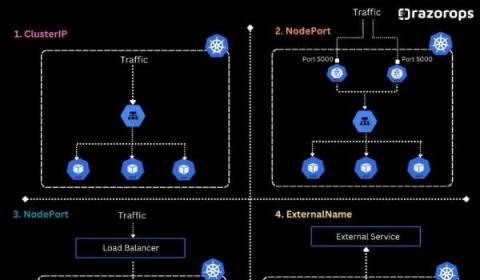
Kubernetes Services & Types

Kubernetes stands out as a powerful tool for managing, scaling, and deploying containerized applications. At the heart of Kubernetes lies its service management capabilities, which play a crucial role in facilitating communication between various components within a cluster. In this guide, we delve into Kubernetes services, exploring their types, functionalities, and best practices.

Configuration as Code: Everything Developers Need to Know

Configuration as code (CaC), a practice that involves setting up operating systems and software through configuration files, has quickly become an essential concept for software developers and DevOps teams. The key reason for this is that CaC integrates seamlessly with CI/CD and version control pipelines, a game-changing benefit discussed in this article.

Komodor Joins Forces with Cisco FSO to Elevate Kubernetes Management to New Heights

We at Komodor are excited to announce our groundbreaking integration with Cisco Full-Stack Observability (FSO). This collaboration marks a significant milestone in Kubernetes Continuous Reliability, bringing together the best of both worlds to redefine Kubernetes management.

What is Kubernetes Architecture?

Kubernetes is an open-source platform designed to automate deploying, scaling, and managing containerized applications. It groups containers that make up an application into logical units for easy management and discovery. Understanding the architecture of Kubernetes is crucial for anyone who works with this platform. It helps you to better understand how different components of a Kubernetes cluster interact with each other and how applications are run on this platform.