Operations | Monitoring | ITSM | DevOps | Cloud

The latest News and Information on Containers, Kubernetes, Docker and related technologies.

Sysdig and Apolicy join forces to help customers secure Infrastructure As Code and automate remediation

Today, we announced that Sysdig is acquiring Apolicy to enable our customers to secure their infrastructure as code. I could not be more excited because the innovation that Apolicy brings to bear is unique and highly differentiated, allowing customers to strengthen their Kubernetes and cloud security and compliance by leveraging policy as code and automated remediation workflows that close the gap from source to production.
Migrating Thousands of Cloud Instances to New Kubernetes Custom Resources

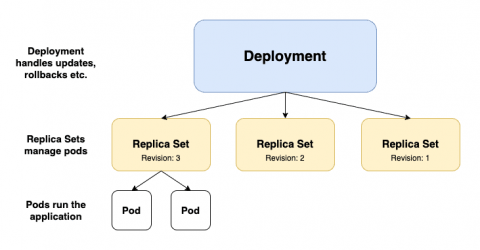
Mattermost’s Kubernetes Operator spins up and manages Mattermost instances running on Kubernetes based on a ClusterInstallation Custom Resource (CR). Mattermost Operator 1.0 has evolved a lot since its release, along with the ClusterInstallation CR in the v1alpha version. As time went by — as with any software — the Operator gained more features, configuration options, functionalities, and technical debt.

LaunchDarkly Integration: Feature Flag Aware Troubleshooting

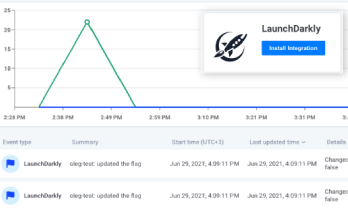
Troubleshooting is the understanding of changes within the system and their impact on its health, behavior, and functionality. However, as dev environments grow exponentially more complex, the definition of “the system” itself also constantly expands. To keep pace, we constantly work to evolve Komodor’s platform and enrich it with new capabilities and integrational options.

Deploy your apps on Scaleway with Qovery! Get early access now

When we launched Qovery in January 2020, our product was only supporting app deployment on Amazon Web Services (AWS). 20 months later, 5534 developers from more than 120 countries use Qovery to deploy their apps on AWS and Digital Ocean. Today, more and more European companies would love to benefits from the excellent user experience of Qovery on a European cloud service provider 🇪🇺.

Packet Capture Without "tcpdump" for Go Apps in Kubernetes

Every developer knows there are some utilities that are completely indispensable from their workflows. The programmer’s toolbelt, if you will. These toolbelts are usually different from person to person, but if there is one tool that everyone should use or at least know how to use, it is tcpdump. If you are unfamiliar, tcpdump is a tool that allows you to dump and inspect live network traffic being observed on a network interface.

Calico eBPF Data Plane Deep-Dive

Sometimes the best way to understand something is to take it apart and see how it works. This blog post will help you take the lid off your Calico eBPF data plane based Kubernetes cluster and see how the forwarding is actually happening. The bonus is, unlike home repairs, you don’t even have to try to figure out how to put it back together again! The target audience for this post is users who are already running a cluster with the eBPF data plane, either as a proof-of-concept or in production.

How to Establish a Culture of Secure DevOps

We’re constantly told to “Shift Left” and that Secure DevOps is the only way to have confidence in your cloud native applications. But speaking to end-users and industry colleagues, it’s clear that there are some major challenges in adopting Secure DevOps. If we read our history books, we know that DevOps wasn’t successfully adopted by buying tools, and a true cultural movement towards DevOps wasn’t established by having a small dedicated team of DevOps specialists.

Observability with Zero Code Instrumentation? Meet eBPF

Current observability practice is largely based on manual instrumentation, which requires adding code in relevant points in the user’s business logic code to generate telemetry data. This can become quite burdensome and create a barrier to entry for many wishing to implement observability in their environment. This is especially true in Kubernetes environments and microservices architecture.

Kubernetes security policy design: 10 critical best practices

In this blog post, I will be looking at 10 best practices for Kubernetes security policy design. Application modernization is a strategic initiative that changes the way enterprises are doing business. The journey requires a significant investment in people, processes, and technology in order to achieve the desired business outcomes of accelerating the pace of innovation, optimizing cost, and improving an enterprise’s overall security posture.