Operations | Monitoring | ITSM | DevOps | Cloud

The latest News and Information on DevOps, CI/CD, Automation and related technologies.

DevOps State of Mind Ep. 9: Recruiting for a DevOps Culture

Liesse Jones: Today we're joined by Anna-Marie Gutierrez-Lee, affectionately known as AMG, who's the Director of Talent Acquisition at LogDNA. She's passionate about mentoring recruiting teams and connecting talent to their dream careers, while fostering a genuine and positive candidate experience. Today, we're going to talk about how to recruit for a DevOps culture and why it's so important to bring more underrepresented talent into tech.

What Are the Differences Between Elastic Beanstalk, EKS, ECS, EC2, Lambda, and Fargate?

Life before containerization was a sore spot for developers. The satisfaction of writing code was constantly overshadowed by the frustration of attempting to force code into production. For many, deployments meant hours of reconfiguring libraries and dependencies for each environment. It was a tedious process prone to error, and it led to a lot of rework. Today, developers can deploy code using new technology such as cloud computing, containers, and container orchestration.

Kubernetes Master Class: Creating RKE2 Cluster Templates

Rancher 2.6 introduces a new Cluster-API based provisioning mechanism for RKE2 and K3s clusters. This also brings a completely new cluster templating system, which is based on Helm charts and is much more flexible compared to the old RKE1 cluster templates. In this master class, you will learn how the Cluster API works, how you can leverage it in Helm Charts, how to do versioning and how to create a nice UI wizard for them.

Flyway Desktop: Working with PostgreSQL

Flyway Desktop now supports PostgreSQL. Now you can take advantage of a hybrid development environment that allows you control your database objects in a state-based manner in development, but then take full advantage of a migrations approach for deployments. This makes using Flyway for automated deployments even easier to manage and implement.

Practical Tips & Tricks For Securing Your CI/CD Pipelines

Many enterprises still struggle to get security right. To protect their business, it is critical they focus on security during the entire infrastructure and application lifecycle, including continuous integration and deployment. In this workshop, we will cover security mechanisms you can employ in your CI/CD pipelines to tighten security while enabling developers to push their code, quickly and safely.

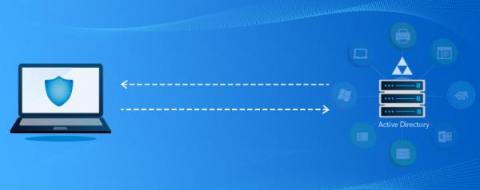
A practical approach to Active Directory Domain Services, Part 2: Active Directory and the Domain Name System

For readers who have returned to this blog after understanding the basics of Active Directory (AD) in part 1 of this series, welcome back! For all new readers: Hello! Get ready to jump into the world of AD. It would be good to take a quick peek at what was covered in part 1 before you continue. Be sure to read through part 1 as it will be your guide to: Part 2 of this series aims to introduce the interrelation of AD with the Domain Name System (DNS).

Logic App Best practices, Tips and Tricks: #6 Error handling... configure run after settings

In my previous blog posts, I talked about some of the most essential best practices you should have while working with the Azure Logic App: And some tips and tricks: Today I’m going to speak about another critical Best practice, Tips, and Tricks: implementing Error handling inside Logic Apps.

The Six Trends Overwhelming IT Ops-and What to Do About Them

IT Operations is experiencing lightning-fast change right now. From the emergence of cloud computing to the explosion of data—not to mention ever-present cyber threats—every day is a new day for IT Ops. At BigPanda, we’re laser-focused on making life easier for IT Ops teams, which means we’re staying on top of all this change to help IT Ops keep up.