Operations | Monitoring | ITSM | DevOps | Cloud

The latest News and Information on DevOps, CI/CD, Automation and related technologies.

How Approval Pipelines Prevent Deployment Errors | ENV Zero Topic Talk

Welcome to another ENV Zero Topic Talk! Today, we explore how approval pipelines can help prevent costly deployment errors. Even with automation, errors in deployment can cause downtime, lost revenue, and security risks. Approval pipelines ensure that only properly reviewed and validated changes are pushed live, minimizing human error and improving deployment accuracy. Learn how ENV Zero's approval pipelines can streamline your deployment process and protect your business from potential risks. Ready to improve your deployment process? Visit ENV Zero to get started today!

Women in Tech: Journeys, Grit, and the Future We're Building | Harness Blog

Technology evolves rapidly — but progress in tech isn’t driven by tools alone. It’s driven by people. By curiosity. By courage. By individuals who choose to step into complex systems and shape how they function. As an engineering leader driving application and API security, I have always believed that our industry is at its best when complex concepts are made accessible and practical for everyone.

Faster code doesn't mean faster delivery

Software development has never moved this fast. JetBrains' 2026 AI Pulse Survey found that 90% of developers now use at least one AI tool at work. CircleCI's 2026 State of Software Delivery report, covering 28 million workflows across 22,000 organizations, found that daily CI workflow runs jumped 59% year over year, the largest single increase they've ever recorded. In that same period, CI success rates dropped to a five-year low.

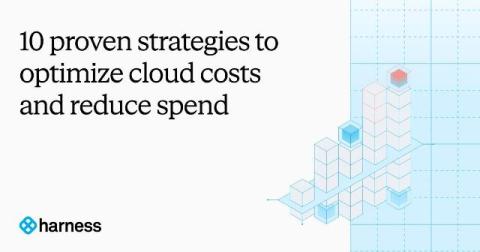
Cloud Cost Visibility at Scale: Why It Fails & How to Fix It | Harness Blog

Why does your cloud cost visibility break down the moment someone spins up a Kubernetes cluster in a new region without telling anyone? You get the alert three weeks later when the bill arrives — and by then, nobody remembers which experiment justified the spend, or which team should own it. This scenario repeats constantly across platform teams managing multi-cloud environments at scale. Cloud cost visibility works fine when you have five services and one AWS account.

Smarter Alert Management: Test on Historical Data, Review Transitions, and Preview Silencing Schedules

Alert fatigue usually isn’t caused by one thing. It’s the accumulation of thresholds that are slightly too sensitive, alerts that fire during known maintenance windows, and historical patterns that nobody has the tools to review easily. Fixing it requires better visibility into how alerts actually behave over time, and a way to test changes before they hit production. We’ve shipped three improvements to alerting in Netdata that address different parts of this problem.

Why post-mortem action items die

You can run the best debrief of your life. Honest timeline, blameless tone, real insights. People leave the room nodding. And then nothing happens. This is the last mile problem of post-mortems - and it's an easy trap to fall into. When you've just been through a stressful incident, getting it back up is the priority. Once it's over, the post-mortem itself can feel like the finish line. You've documented what happened, been honest about it, identified what went wrong. It feels like the work is done.

An introduction to Konstruct: Production-ready IDP in minutes

What if you could own your platform and deploy it anywhere, without months of GitOps setup or vendor lock-in? Konstruct is an Internal Developer Platform that gives you a production-grade platform-as-a-service, deployed in minutes. It delivers a GitOps-powered experience that is fully owned and operated by you, distributing consistent, self-service control planes to development teams so they can ship without friction.

You're Running Agents. Your Tooling Is Still Catching Up.

Introducing GitKraken Desktop 12.0. At some point in the last year, the question shifted. It stopped being “should I use AI coding agents?” and became “how do I run more than one at a time without losing my mind?” If you’ve been there, you know what the management layer looks like. A terminal per agent. A worktree created by hand before each session.