Operations | Monitoring | ITSM | DevOps | Cloud

The latest News and Information on DevOps, CI/CD, Automation and related technologies.

Tutorial: Shipping Docker Metrics to Logz.io

Docker is an essential bridge in modern DevOps. Despite Kubernetes overtaking Docker on orchestrating containers, the Docker container itself remains the standard and likely will for the foreseeable future. We developed the Docker Metrics collector to operate as its own container that will run Metricbeat using the modules you are running in real time. Now, in addition to the Docker module, we are now releasing an AWS module for operations in the cloud.

Runtime Security in Rancher with Falco

Runtime security for Rancher environments requires putting controls in place to detect unexpected behavior that could be malicious or anomalous. Even with processes in place for vulnerability scanning and implementing pod security policies and network policies in Rancher, not every risk will be addressed. You still need mechanisms to confirm these security barriers are effective and provide a last line of defense when they fail.

Challenges using Prometheus at scale

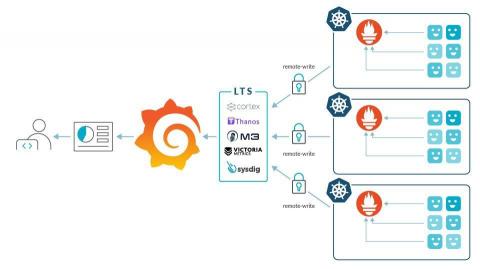
This article will cover the most common challenges you might find when trying to use Prometheus at scale. Prometheus is one of the foundations of the cloud-native environment. It has become the de-facto standard for visibility in Kubernetes environments, creating a new category called Prometheus monitoring. The Prometheus journey is usually tied to the Kubernetes journey and the different development stages, from proof of concept to production.

Integrating LaunchDarkly with Sleuth

Today, we’re excited to announce you can now integrate LaunchDarkly with Sleuth, allowing you to track feature flags as a source of change in your DevOps stack. The Integration LaunchDarkly gives developers fine-grained control over which users see which features, and with our native LaunchDarkly integration you can now track the status and impact of feature flags relative to other source changes in your projects, such as code, issues, etc.

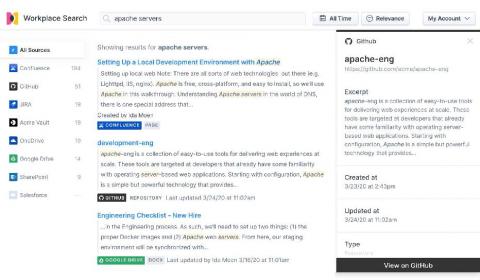
Searching GitHub: Improving developer efficiency with Workplace Search

More than 40 million people use GitHub as a collaboration tool for building software around the world. For most companies — including distributed teams like Elastic — GitHub has become a critical content source for building software, holding much of the information and knowledge upon which the organizations are built, across items like issues, pull requests, and more.

Serverless Continuous Integration in the era of parallelism

As a team that does pure serverless, we place a lot of emphasis on fast deployments. Lately, though, as our codebase has gotten larger, and the number of interactions between the microservices has increased, we have come up against the classic problem of excessively long test execution times in our serverless continuous integration.

Episode 8: Configuring NGINX with Ansible to Support ASP.NET Core

ASP.NET Core applications have a built-in webserver called Kestrel. This internal webserver is not intended to serve requests directly. It must be placed behind a production quality webserver such as NGINX or IIS. We use Ansible to provision NGINX on our Linux server.

How to deploy and monitor software with speed and confidence using Octopus Deploy and Raygun

In this live demonstration, you’ll witness experts from Octopus and Raygun deploying software into production and monitoring the impact of these changes in real-time. Learn first-hand how to seamlessly configure deployments, identify issues, and track performance gains.

Kubernetes Master Class: Monitoring and Alerting with Prometheus & Grafana

Rancher users and operators can collect custom metrics, automate alerts, notifications, and actions, and create cluster and project-level dashboards. In this class, you'll learn how to setup alerts with Rancher and Prometheus Alert Manager to find problems in your clusters before there's an outage. You'll also learn to visualize metrics for Kubernetes and for your applications so you can gather new insights to your users' usage patterns and your applications' run-time behaviors.

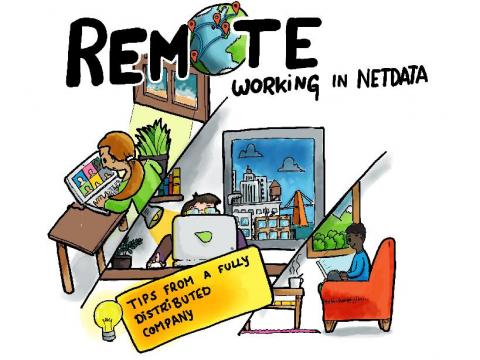
Creating a thriving, agile, remote team

The coronavirus (COVID-19) pandemic has forced many organizations to take unprecedented steps towards remote working. As a fully distributed team, we’ve faced the common challenges of remote work. Based on our experience from our very beginning in 2018, all but a few of these organizations new to remote working will face hurdles to overcome and may try to revert to colocation as soon as possible. Remote working is hard, even when it’s carefully planned and executed.