Operations | Monitoring | ITSM | DevOps | Cloud

The latest News and Information on DevOps, CI/CD, Automation and related technologies.

Best practices for tagging your monitors

Tags provide critical context for troubleshooting issues across any dimension of your environment. By applying best practices for tagging your systems, you can efficiently organize and analyze all your monitoring data, and set up automated multi alerts to streamline alerting workflows. Similar to any tags you would add to your services and infrastructure, monitor tags—tags that you apply to your monitors—are an essential feature for organizing and simplifying your workflows.

Now Available: Calico for Windows on Red Hat OpenShift Container Platform

Approximately one year ago, Kubernetes 1.14 made support of Windows containers running on Microsoft Windows Server nodes generally available. This was a declaration that Windows node support was stable, well-tested, and ready for adoption, meaning the vast ecosystem of Windows-based applications could be deployed on the platform.

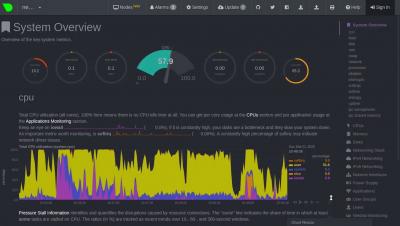
Netdata's standard dashboard

In this video, we’ll take a look at the Netdata's real-time dashboard, which has hundreds of charts, designed by both our team and the community. We’ll cover the elements related to the dashboard, such as contexts, dimensions, menus, and even raised alarms. By default, Netdata listens at port 19999. So, to get to the dashboard, open a web browser and enter your SERVER-IP ADDRESS plus port number or localhost plus port number.

Running Containers in AWS with Rancher

This blog will examine how Rancher improves the life of DevOps teams already invested in AWS’s Elastic Kubernetes Service (EKS) but looking to run workloads on-prem, with other cloud providers or, increasingly, at the edge. By reading this blog you will also discover how Rancher helps you escape the undeniable attractions of a vendor monoculture while lowering costs and mitigating risk.

Kubernetes Master Class: Getting started with Pod Security Policies and best practices in Production

Kubernetes Pod Security Policies (PSPs) is an enforcement mechanism to ensure that Pods run only with the appropriate privileges and can solely access the appropriate resources. You can leverage them as a threat prevention mechanism by controlling Pod creation, and limiting the capabilities available to specific users, groups, or applications.

The 15 Best Podcasts for Engineers

If you've been on the hunt for a new developer podcast, then you understand just how difficult and fruitless that pursuit can be. You can spend hours online sifting through coding podcasts, programming podcasts, and DevOps podcasts only to realize one simple thing: none of them focus on your preferred programming language! With thousands of different developer podcasts out there, the problem is magnified exponentially. Fortunately, we at Scout APM have nothing but expertise and time on our hands.

NGINX 502 Bad Gateway: PHP-FPM

This post is part of a series on troubleshooting NGINX 502 Bad Gateway errors. If you’re not using PHP-FPM, check out our other article on troubleshooting NGINX 502s with Gunicorn as a backend. PHP-FastCGI Process Manager (PHP-FPM) is a daemon for handling web server requests for PHP applications. In production, PHP-FPM is often deployed behind an NGINX web server. NGINX proxies web requests and passes them on to PHP-FPM worker processes that execute the PHP application.

How to Create DevOps Pipelines That Work

DevOps is a software development practice that combines development and operations teams. When organizations use DevOps, they typically also use agile methodologies for managing and completing projects. The combination of DevOps and agile practices enables teams to build software faster and more efficiently. One of the primary tools of DevOps is the continuous integration/continuous delivery (CI/CD) pipeline.