Operations | Monitoring | ITSM | DevOps | Cloud

Improve incident triage with AIOps to reduce downtime

Downtime is expensive, both to your budget and your brand reputation. As IT outage costs increase, it’s critical to identify and prioritize incidents quickly to minimize the impact on your organization. In a recent survey of more than 400 global IT professionals, Enterprise Management Associates found that unplanned downtime costs average $14,056 per minute. That’s an increase of nearly 10% from 2022.

The Best 15 Interactive Dashboard Examples

Your organization, irrespective of its size, is likely creating a substantial amount of data, and deriving value and insights from this data is vital. This is where dashboards can assist you. With reporting dashboards, you can cut through the noise, and select the metrics that are pivotal to your team to begin visualizing them and the trend of these metrics through continuous monitoring, enabling your team to acquire actionable insights.

Grafana Cloud Synthetic Monitoring: How to simulate user journeys to ensure the best possible end-user experience

Here at Grafana Labs, we have a long-standing commitment to helping our users understand how their applications and services behave from an external point of view. This critical practice — known as synthetic monitoring — has been a key focus of ours for nearly a decade. Back in 2015, we released worldPing, our first product to help measure the user experience and improve website performance.

Upskilling your Network Operations Center

Many organizations are heavily investing in AI and automation to remove the burden of manual work and operational efficiency. However to drive their wide scale adoption, they also need employees who can collaborate effectively with the technology. To bridge that gap, companies can use upskilling to retain talent, mitigate risks to the business, and allow employees to grow their careers.

Whose infrastructure is it anyway?

The recent McKinsey report, the state of cloud computing in Europe has exposed not only low returns, but also serious challenges for businesses embracing cloud as the basis of digital transformation. The first concern is that not only is the value of cloud ‘in isolated pockets and at subscale ’, but also that it is limited to the IT department. Whilst 75 percent of those surveyed reported either technology cost savings or productivity increases, only one-third have seen such savings beyond IT.

EBS Pricing Explained: A Guide For 2024

Understanding Amazon Elastic Block Store (EBS) pricing is fundamental for any organization using AWS to manage their cloud costs effectively. Amazon EBS provides the storage your cloud applications need to run smoothly. However, it’s equally important to understand its pricing to keep your cloud spending in check. This guide aims to simplify Amazon EBS pricing and offers practical tips on managing and reducing these costs. But first, what is it?

Data Storage Costs Keeping You Up at Night? Meet Archived Metrics

We all have been there! Getting the largest metrics plan available, turning on real-time monitoring, and…. You know what happens next… BIG BILL! With the explosion of telemetry from microservices, containers, and cloud stacks, engineering teams often have to choose between data and budget. To help our Splunk champions, we are introducing Archive Metrics to make storing data up to ten times cheaper.

Troubleshooting Microsoft Teams Latency Issues

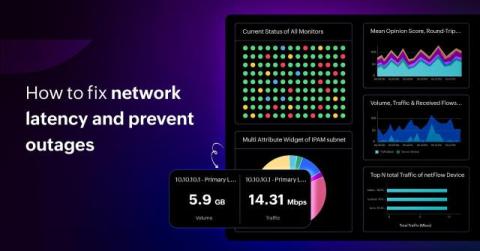
Welcome to our guide on troubleshooting Microsoft Teams latency issues! Whether you're a remote user striving to stay connected with your team or an IT professional responsible for maintaining a smooth and efficient virtual workspace, dealing with latency can be a frustrating experience. From delays in audio and video to sluggish file uploads and downloads, latency can significantly impact productivity and user satisfaction.

DCIM Software: What Is the Risk of Not Making This Investment?

Investing in Data Center Infrastructure Management (DCIM) software is critical for modern businesses to efficiently manage their data center resources. Without DCIM software, organizations lack comprehensive visibility into their data center infrastructure, making it challenging to identify and address issues promptly, leading to potential service disruptions.