Operations | Monitoring | ITSM | DevOps | Cloud

7 Kubernetes Predictions for 2026 - AI Will Push SRE to its Limit

As AI workloads shift from training to massive-scale inference, SRE teams are about to feel even more pressure. GPU-heavy computing is breaking the assumptions today’s clusters were built on, while enterprises are beginning to trust autonomous operations and cost pressure is pushing consolidation across the cloud-infrastructure stack.

Ansible Vs. Terraform: What Are They And Which Is Best?

Choosing the right tool to manage your infrastructure can shape how fast your team moves and how reliable your systems become. Two names appear in almost every conversation: Ansible and Terraform. Both help you define, manage, and scale your environment. But they solve different problems and work in very different ways. One focuses on configuration. The other focuses on provisioning. Both are powerful. Both are widely used. And both can work together in the right stack.

Application Monitoring 101: How to Correlate Average Response Time With Other Metrics

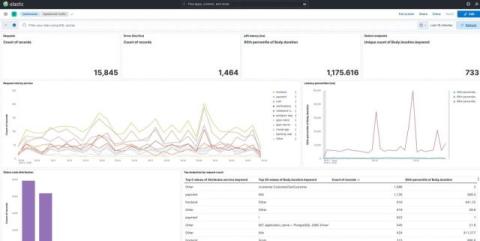
Average response time has become the default metric on many dashboards. It's easy to compute, easy to explain, and provides a single number to track over time. Of all the metrics available in application monitoring, this one feels closest to the actual user experience. But this simplicity can create a trap if you treat the average as a complete picture of system health. In fact, it’s really the starting point for a deeper investigation.

From Firefighting to Foresight: Bright Beginnings for a New Year of IT Confidence

When I was invited to join one of our customer’s end-of-year team wrap-up sessions, it came as no surprise when the meeting opened with a familiar refrain: “Next year will be different. Next year, we’ll get ahead of the noise. Next year, tickets won’t pile up while we’re still triaging yesterday’s issues.

Smarter Slack Alerts with Rollbar + Zapier AI

For many engineering teams, Slack is the nerve center of daily work. It’s where incidents are discussed, decisions are made, and collaboration happens in real time. But when it comes to error alerts, Slack can quickly turn from helpful to overwhelming with noisy, context-poor notifications that developers learn to ignore.

High Bandwidth Usage Detected - Causes, Impact, and Response

You log into your network monitoring dashboard and see the alert: “High bandwidth usage detected.” This is not just a routine message; it’s a sign that something is putting pressure on your network. Bandwidth is the backbone of modern connectivity, and when usage spikes unexpectedly, the consequences can be severe. Applications slow down, cloud costs rise, and in some cases, spikes may point to a security threat.

Agentic AI-powered Zero Trust Models: Securing Modern CRM through Observability and Identity Protection

In Q3 FY26, Salesforce reported more than $540M in Agentforce ARR, 330% year-on-year growth, and over 9,500 paid Agentforce deals in production, processing trillions of tokens per quarter (Source). At that scale, a single misconfigured or compromised agent is no longer “one bad bot”. It’s a systemic risk to revenue, brand, and compliance.

Authorization Code Flow & redirect_uri_mismatch Errors: Monitoring & Fixing

If you’ve implemented OAuth 2.0 using the Authorization Code Flow, chances are you’ve encountered the redirect_uri_mismatch error at least once. It’s one of the most common (and most misunderstood) OAuth failures teams face when integrating authentication into web applications. On paper, the error is simple. The authorization server compares the redirect URI sent in the request with the redirect URIs registered for the application.

JSONPath & JSON Validation for Web API Monitoring Assertions

Most API monitoring setups still rely on a narrow definition of success: Did the endpoint respond, and did it return a 200 status code? While availability is essential, it’s no longer enough for modern, API-driven systems. In real production environments, APIs frequently return successful HTTP responses with incorrect or incomplete payloads. Authentication endpoints may issue tokens missing required fields. Business-critical APIs may return empty objects instead of valid data.