Operations | Monitoring | ITSM | DevOps | Cloud

Synthetic testing: A definition and how it compares to Real User Monitoring

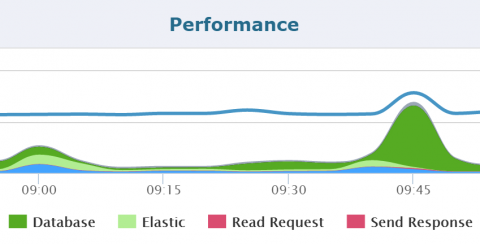
Performance monitoring is critical for a healthy software application. If you don’t have synthetic testing or real user monitoring in place, opportunities for performance optimizations are slipping through the cracks. With the guidance of a monitoring tool, on the other hand, you could be fixing problems such as slow-loading pages within the hour. The two main types of application monitoring are Real User Monitoring (RUM) and synthetic testing (or synthetic monitoring).

Interoperability a long way off as enterprises target multicloud

Clouds remain segmented, leaving businesses little recourse for how to best navigate complexity. The multicloud movement has flavors to it. Intentional or accidental, an enterprise can blend a kaleidoscope of infrastructure services with existing software tools. IaaS requirements can tag along with SaaS adoption, easily creating a multicloud environment before technology teams can consider the sprawl.

Cloud Storage vs. Cloud Backup: Know the Difference

The cloud has become a core component of Information Technology because of its flexibility, affordability, and ease of use. Software is run via cloud subscription models, reducing time to market and simplifying distribution. Entire offices have moved into the cloud, allowing teams of all sizes to collaborate and communicate remotely. Beneath it all, files and data are stored and shared in the cloud where it’s readily accessible across devices.

Top 7 lessons from the 2021 Log4j vulnerability

The Log4Shell (CVE-2021-44228) zero day vulnerability in the Java logging framework Log4j (versions 2.0 to 2.14.1) was revealed on December 9, 2021. The Apache Foundation assigned the maximum CVSS score of 10 to Log4Shell, as millions of servers and potentially, billions of devices came under risk. Security professionals around the world began patching the vulnerability, and scanning their systems to rule out any potential breach.

Importance & Benefits of IT Asset Management in the Banking Sector

Asset management is significant for all industries and sectors. If your organization is equipped with assets, then asset management is required in order to get maximum value from your assets & to keep them secure as well. In this blog, we will know about banking asset management so without wasting any time let us begin!

Lighting up the Rails: A Checklist for Modernizing Railway IP Optical Networks

Ah, the romance of the railroad. Conductors shouting “all aboard”, watching the countryside whizz by, dining cars and sleeper cars, boxcars, the Orient Express, bullet trains, chasm-spanning bridges, the clickety clack of the rails, clang clang at the crossings, and the engineer waving from the caboose. As we near the two hundred year mark of the first passenger train in 1825, we can observe that railways, our oldest modern means of mass transportation, are as strong as ever.

Tagging in a monitoring tool: what is it and how can it benefit your team?

As you start to have responsibility for more than a handful of SQL Server instances, you’ll need to get more organised. Everyone around you benefits if you’ve recorded basic things like what the server does and who is responsible for it, and we think that a great place to do this is in your monitoring tool (and, better still, if that’s SQL Monitor!).

Three Common Incident Response Process Examples

What makes an engineering team? Communication, collaboration, process, order, and common goals. Otherwise, they would just be a bunch of engineers. The same is true of their tools. Connectivity and process turn a bunch of tools into a DevOps toolchain. If you need a DevOp toolchain, you can use it to easily build an incident response process.

Real-time drone tracking and management with Grafana

The number of internet-connected assets around us that are powering services and utilities in a wide array of sectors is rising at an exponential rate. As a result, it’s becoming critical for businesses that provide such services and utilities to have an observability stack tailored to the type of physical hardware devices that are generally deployed in swarms.

Parallelizing Queries with Rails 7's `load_async`

As you're likely well aware, Rails 7 was released last month bringing a number of new features with it. One of the features we're most excited about is load_async. This features allows for multiple Active Record queries to be executed in parallel which can be a great tool for speeding up slow requests. Since Rails introduces an entirely new infrastructure for load_async, Skylight's existing integration wasn't capturing all of these queries.