Collin’s dictionary defines “behavior pattern” as a recurrent way of acting by an individual or group toward a given object or in a given situation. Analyzing and understanding the behavior patterns of individuals has proven to provide in-depth solutions to problems in different walks of life, including cybersecurity.
In December last year, we released tracking for Core Web Vitals using custom tagging so that you can have consolidated performance metrics that accurately reflect your customer's digital experience. Today, we are excited to continue this journey and announce our native first-class support for Core Web Vitals (CWV) tracking within Real User Monitoring. Now, you can see a detailed overview of how your website performs against Google's modern user-centric metrics, alongside all the diagnostics you need to take action.
Excited to launch our first newsletter. We are delighted to have crossed 1.6k stars on GitHub, growing more than 30% last month. Catch up on what we're upto at SigNoz!
We recently released uptime monitoring, a pretty big addition to our set of features. Our customers have often requested it, and it was a logical next step for us to add uptime monitoring to our app. In today’s post, we’ll explain how we went from considering uptime monitoring impossible to build, to building it in a week. We’ll break down how seemingly over-engineering can really pay off in the end.
Network anomalies vary in nature. While some of them are easy to understand at first sight, there are anomalies that require investigation before a resolution can be made. The MITRE ATT&CK framework introduced in Kemp Flowmon ADS 11.3 streamlines the analysis process and gives security analyst additional insight by leveraging knowledge of adversaries' techniques explaining network anomalies via the ATT&CK framework point of view.
This blog is the second in a four-part series on infrastructure automation for government agencies that are modernizing digital systems while grappling with budget and staffing constraints and the challenges of COVID-19.
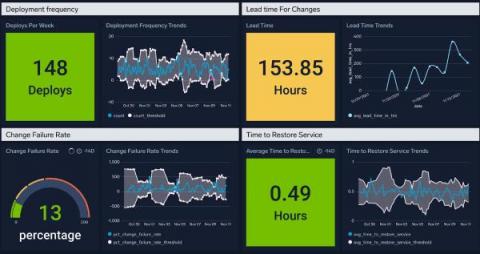
When we talk about metrics in software delivery, a lot of developers think of execution metrics — things like throughput, delivery and number of deploys. But in reality, those metrics don’t motivate anyone — at least not without connecting them to a bigger picture. I’ve worked in software for 23 years. I’m a three-time founder and four-time CTO, responsible for leading a 200+ member distributed engineering organization.
In the first article in this series, we explained how to set up your developer environment to begin creating Mattermost plugins. In the second, we examined the structure of server-side and web app plugins and how to deploy them. Now, it’s time to dive deeper into the server side of the application, which is written in Golang.