For today’s tech tip, we’re going to focus on our Endpoint Monitoring Client and two specific use cases: Wi-Fi and application health. With so much of the workforce working remotely, Endpoint Monitoring is an essential tool to help smooth the transition. According to recent research from Gartner, nearly half of US employees will continue to work remotely for at least some of the time post-pandemic.
The whole internet spins across different domains but when we talk about the backbone suite of every organization, MS Office 365, is for sure, one of the biggest contenders. Just like the recent Century Link/Lumen outage, we witnessed another major outage, this time Microsoft O365. This month might as well be considered a bad month for the internet, as we have seen a lot of daily used consumer services getting impacted like Reddit, Pinterest, Google Services, etc.
Like many in IT, I am a big fan of Microsoft System Center Configuration Manager (SCCM). It’s one of those tools that you can’t really go without: it can help locate your company’s servers, desktops and mobile devices; it helps install client software, patch updates (see Microsoft Patch Tuesday); and it protects your endpoints and access control tools. All good things, but… Sometimes our beloved SCCM needs a little backup—like Robin to Batman.
Earlier this year, we shared the certified Ansible Collection for Sensu Go, which makes it easy to automate your monitoring and achieve real-time visibility into auto-scaling infrastructure. Now that Sensu Go 6 has been released, we’ll share the latest updates on the Collection, including the management aspects of Sensu Go 6, with a focus on the structure of Ansible playbooks in the Sensu Go 6 world.
The main focus for cybersecurity teams — moving beyond compliance — is to deliver the level of security required to manage the likelihood of a breach and the potential impact to the business. This is more effective than simply focusing on the cost of delivering security services.
It seems almost everything is going digital during this pandemic: businesses, education, and medical consultations. This increased digital consumption is squeezing the juice out of the IT infrastructure of many organizations. On top of that, remote work policies are posing serious security issues. At times like these, IT infrastructure monitoring is like a football game for IT admins, except: So how do you navigate all these challenges and score a touchdown?
Set up custom error pages in HAProxy to ensure consistent, branded messaging that supports any backend web stack. The memory is probably still fresh: You’re shopping online at your favorite website, looking for something specific, you’ve got it narrowed down to two or maybe three products, you make the final decision, click to checkout and then— Internal Server Error. A cryptic error has replaced the page you were expecting. More than surprised, you feel knocked off balance.
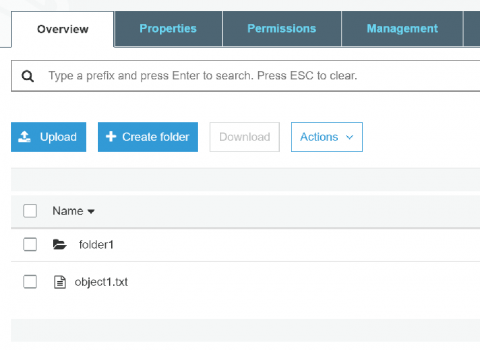
Amazon S3 is a highly-scalable object storage system. Amazon S3 can contain any number of objects (files), and those objects can be organized into “folders”. However, to S3, folders don’t really exist. huh? That’s right. “Folders” are a human concept, applied to S3 keys for organizational purposes. But they’re nothing special to S3 itself. Before we begin, forget everything you know about the S3 Management Console.