Operations | Monitoring | ITSM | DevOps | Cloud

NetFlow Basics: An Introduction to Monitoring Network Traffic

To fully understand what NetFlow is and why it’s used for network monitoring, we first need to know what a flow is. When computers need to talk to one another they establish communication channels, commonly referred to as connections. (Technically speaking, these communication channels can only be called connections when the TCP protocol is involved.) A flow refers to any connection or connection-like communication channel.

Quantifying the Digital Employee Experience

We’ve talked to a lot of people about their company’s digital employee experience the past few years – from C-suite executives and board members looking to make sure they’re doing what they can to make work lives better and retain staff, to the actual CIOs and IT managers tasked with changing and improving their employees’ workplace experience. We’ve even heard from employees on the front lines every day about what works and what doesn’t at their companies.

How to collect, standardize, and centralize Golang logs

Organizations that depend on distributed systems often write their applications in Go to take advantage of concurrency features like channels and goroutines (e.g., Heroku, Basecamp, Cockroach Labs, and Datadog). If you are responsible for building or supporting Go applications, a well-considered logging strategy can help you understand user behavior, localize errors, and monitor the performance of your applications.

Best Practices for Proactive Monitoring

If you could know information about your systems in advance, what would you choose to know? If there was a set of repeating behaviors that happened consistently before an outage, would you want to know what they were? This is the idea behind proactive monitoring – the switching of context from “reactive” monitoring to something that allows you to act before the problem arises. Here are some guidelines to help you get started with your customized solution.

eG Enterprise Staffing Guidelines for Citrix Digital Workspace Services

Most Citrix professionals are well aware that when desktop or application performance is slow, the first finger tends to get pointed at the Citrix team. But even for complex ecosystems like Citrix, ITIL guidance like a Service Desk continues to be a long-standing ‘best practice’ and can help if IT staff work together. This post will outline some of the ITIL guidance from the perspective of eG Enterprise and a Citrix-based digital workspace.

Icinga Camp Berlin 2019

More than 150 monitoring maniacs found their way to the location. For another year Kalkscheune was the venue for the Icinga Camp Berlin. Among those maniacs were many well-known faces, but also surprisingly many new ones. A lot of talks and discussions and besides tasty food, you could also grab an Icinga shirt from the newest collection. As usual the event started with pretzels, coffee and a quick kick off from Icinga CEO Bernd.

Delivering bad news in a good way

Whenever I wake up in the morning, the first thing I do is… well… not go over last night’s notifications on my phone. This has taken a while to get used to, but I am happy I did it. And it’s been a few years now. The first thing I do is get up and go to the bathroom. Then, I go into the kitchen, and brew my first coffee of the day. While the coffee is brewing, I raise the window rolls, turn on some music, and make sure everything is ready to have a great start to the day.

Should you build or buy a crash reporter?

You’re in the process of creating and launching new softwareand you want it to be as stable as possible. Or, maybe your software has been running for a while, but you’re frustrated with the bug-reporting workflow in place. Either way it’s time to look for a crash reporting process that fits your application. This leads to a natural question: Should we build it? Or should we buy it?

Mono-Repo vs One-Per-Service

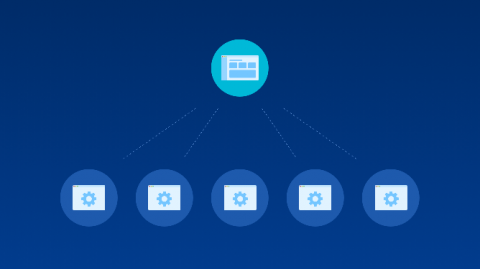
With AWS Lambda, we can deploy and scale individual functions. However, we as engineers still like to think in terms of services and maintain a mapping between business capabilities and service boundaries. The service level abstraction makes it easier for us to reason about large systems. As such, cohesive functions that work together to serve a business feature are grouped together and deployed as a unit (i.e. a service) through CloudFormation.