Operations | Monitoring | ITSM | DevOps | Cloud

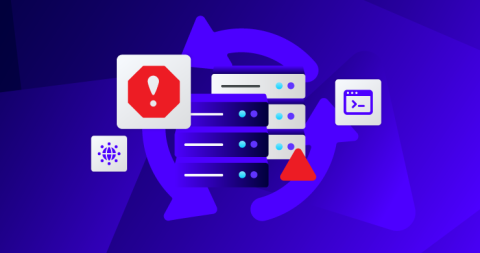
Silent Failure in Production ML: Why the Most Dangerous Model Bugs don't Throw Errors

You’ve done it. Your machine learning model is live in production. It’s serving predictions, powering features, and quietly doing its job. Dashboards are green. There are no errors in the logs. Nothing appears broken. And yet, something is wrong. Predictions are getting less reliable. Users are waiting a little longer for responses. Conversion rates are slipping. Trust is eroding, but no alert fires, no system crashes, and no one knows there’s a problem until the damage has been done.

Agentic AI in DevOps: The Architect's Guide to Autonomous Infrastructure | Harness Blog

For the last decade, the holy grail of DevOps has been Automation. We spent years writing Bash scripts to move files, Terraform to provision servers, and Ansible to configure them. And for a while, it felt like magic. But any seasoned engineer knows the dirty secret of automation: it is brittle. Automation is deterministic. It only does exactly what you tell it to do. It has no brain. It cannot reason.

6 Underused Git Commands That Solve Real Developer Problems

Most developers spend hours each week wrestling with Git. Not because they’re bad at their jobs, but because Git doesn’t actively teach you its most powerful features. At GitKon 2025, our Senior Product Marketing Manager Jonathan Silva revealed 6 underused Git commands that solve the workflow problems developers face every day: botched rebases, lost commits, and merge conflict chaos. These aren’t advanced techniques.

How to Avoid the SharePoint Preservation Hold Library PHL Storage Trap

Most executives assume that moving to Microsoft 365 simplifies cost control. Storage is “in the cloud”, usage is elastic, and governance is handled through policy. In reality, many organisations face a very different experience. They invest heavily in retention policies to meet legal and regulatory requirements, yet their SharePoint storage costs continue to rise year after year, even after large cleanup programs.

Zero crashes, zero compromises: inside the HAProxy security audit

An in-depth look at the recent audit by Almond ITSEF, validating HAProxy’s architectural resilience and defining the shared responsibility of secure configuration. Trust is the currency of the modern web. When you are the engine behind the world’s most demanding applications, "trust" isn't a marketing slogan—it’s an engineering requirement.

Reference architecture: The blueprint for safe and scalable autonomy in SRE and DevOps

Everyone wants autonomous incident response. Most teams are building it wrong. ‍ The ultimate goal of autonomy in SRE and DevOps is the capacity of a system to not only detect incidents but to resolve them independently through intelligent self-regulation. However, true autonomy isn't born from automating random, isolated tasks. It requires a stable foundation: a Reference Architecture.

Aiven for OpenSearch Leaps to Version 3!

We are thrilled to announce that the OpenSearch major version 3 (3.3.2) is available on Aiven for OpenSearch, only a few weeks after its upstream release! The major version 3 of OpenSearch is a foundational upgrade, built on a new, high-performance core, marking a significant step forward in performance and usability. This means that as an Aiven customer, you get immediate access to a faster, more efficient search experience, all fully managed.

Continuous profiling in production: A real-world example to measure benefits and costs

Continuous profiling offers deep visibility into production environments, revealing exactly how applications consume CPU and memory. It’s the go-to observability practice for directly connecting system behavior and performance to specific lines of code. But when teams consider deploying continuous profiling more broadly, a common question comes up: what’s the overhead? Is it safe to run continuous profiling on my production services 24/7, or does the cost outweigh the benefits?

How to Optimize Your Article with Surfer SEO

Writing a good article is not enough anymore. The existing web contains millions of pages which compete for user attention and search engines determine which pages should appear at the top of search results. Optimization holds crucial value because it determines which websites will achieve success in online competition. The goal of our work is to develop content which answers user search queries. Surfer SEO exists specifically to fulfill this requirement.

AI Vendor Lock-In: How AI Is Creating A New Dependency Problem

Like most SaaS companies, you’re under pressure to ship AI-powered features faster, smarter, and at scale. For many teams, that pressure leads to relying on external AI platforms, managed models, and third-party APIs instead of building everything from scratch in-house. At first, it feels like a win. Your team ships an AI-powered feature in weeks instead of months. No GPU clusters to manage. No models to train. No infrastructure to babysit.