Operations | Monitoring | ITSM | DevOps | Cloud

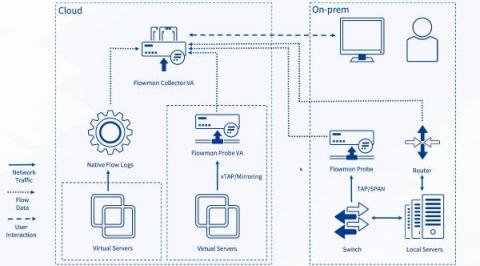
How to Optimize Cloud Monitoring Costs Using Flow Logs in Progress Flowmon

This blog post discusses some of the best practices for balancing the costs of cloud traffic monitoring while maintaining a reasonable level of visibility. Progress Flowmon 12 has introduced the processing of native flow logs from Google Cloud and Microsoft Azure, plus it has enhanced support for Amazon Web Services (AWS) flow logs.

A guide to Microsoft Azure Regions

The global footprint of Microsoft Azure is made up of physical infrastructure of over 200 data centres and connective network components, arranged into regions, and linked by a large interconnected network. Each of the Azure data centres provides high availability, low latency, scalable cloud services close to users to improve reliability and speed. In this blog, we look at the Azure Regions, and explain the benefits of using a direct connection to access Azure infrastructure.

APM is Legacy. Distributed Tracing is Designed for Modern Teams

Some background. Having implemented at least 20 or more APM systems in production as an end-user at various companies, and both deployed and managed countless monitoring tools outside APM, I understand the role of the practitioner. Later on, I shifted to Gartner and led the APM Magic Quadrant for four years, finally spending another four years at AppDynamics (operating under Cisco after two years).

Described Inventory Forecasting Tools and Methods for Optimizing Inventory Process

Inventory management is not a simple task! Especially because demand and supply keep fluctuating. However, it becomes more hectic when you do all these activities on a manual basis. To avoid inventory management issues, organizations must invest in inventory management software. It is very helpful in inventory optimization. When inventory is optimized, then inventory expenses automatically decrease. With effective asset management software, your organization can perform inventory forecasting.

Debugging Race Conditions in Production

Race conditions can occur when a multithreaded application accesses a shared resource using over one thread. Unless we have guards in place, the result might depend on which thread “got there first”. This is especially problematic when the state is changed externally. A race can cause more than just incorrect behavior. It can enable a security vulnerability when the resource in question can be corrupted in the right way. A good example of race condition vulnerabilities is mangling memory.

What is a YAML? - A Box of DevOps?

I recently returned from a birthday trip to Napa Valley and got to spend some time with the Shipa Team in Palo Alto during the trip. Grabbing a coffee on my trek back to San Francisco, I overheard someone talking about YAML at the coffee shop and I had to hold back my laugh. You usually do not hear folks talking about YAML out in the public but this is San Francisco. For many engineers, YAML is a way of life.

How To Conduct A Cloud Cost Analysis: A Step-By-Step Framework

Business leaders and team members face countless decisions every day, some of which are certain to have an impact on the future of a company. Perhaps the most impactful to a SaaS company’s bottom line are financial decisions related to the cloud. Engineers and team leads need to know which cloud architecture choices are worthwhile and which should be scrapped in favor of a more cost effective model.

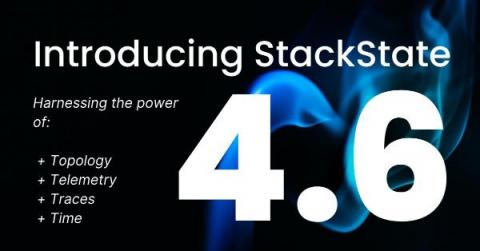
Introducing StackState 4.6: Harnessing the Power of Topology + Telemetry + Traces + Time

Companies depend on observability insights to provide reliable online services to their customers. To support their efforts, StackState is proud to announce a new version of our unique topology-powered observability software, StackState v4.6, available now. This new version brings powerful new capabilities to DevOps and SRE teams who need to maintain a deep understanding of how their stack is behaving to meet their SLOs.

Observability for AWS Fargate Deployments Powered by Graviton2 Processors

Today, cloud native technologies empower a number of organizations to build and run scalable applications in public, private and hybrid cloud environments. Developer and operation teams can build and deploy applications, APIs and microservices architectures with the speed and immutability of containers. Gartner predicts that by 2024, more than 75% of large enterprises in mature economies will be using containers in production.