Operations | Monitoring | ITSM | DevOps | Cloud

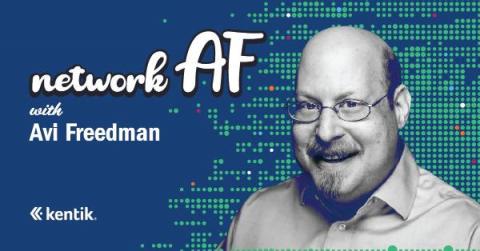
Network AF, Episode 10: Navigating venture capital and networking with Alan Cohen

In this episode of Network AF, your podcast host Avi Freedman chats with networking investor, advisor and VC partner, Alan Cohen. Alan brings a hilarious, witty and nonconformist attitude to the talk, exploring Silicon Valley in the 90s, the joy of moving from large enterprises to small disruptors, and generously sharing secrets of the trade with Avi and podcast listeners.

How we optimized Python API server code 100x

Python code optimization may seem easy or hard depending on the performance target. If the target is “best effort”, carefully choosing the algorithm and applying well-known common practices is usually enough. If the target is dictated by the UX, you have to go down a few abstraction layers and hack the system sometimes. Or rewrite the underlying libraries. Or change the language, really. This post is about our experience in Python code optimizations when whatever you do is not fast enough.

Webinar Recap: Streamline Connections with LogStream QuickConnect

Feature Highlights is a new addition to our ongoing series of webinars. As the name suggests, it’ll focus on specific product features with anonymized customer use cases taking center stage. In other words, how Cribl customers actually use the features to get the job done, sometimes in unintended ways. QuickConnect was the first act with a session “Streamline Connections w/ LogStream QuickConnect”.

Advanced pipeline orchestration with the circleback pattern

With multiple teams working on many projects, having a single pipeline for your software is just not enough. These projects need to be built and integrated before they can be tested and released. So how do dev teams handle this situation? Many teams approach the problem by breaking down software into smaller parts that do less, and are easier to maintain and build. This approach has resulted in the microservices architectures that are increasingly common in our industry.

Customer Support Software (5 Key Features)

Customer support software is a gamechanger for ambitious consulting firms. If you’re trying to scale your consulting business but lack the systems to support your growth, you should explore the potential of customer support software. This will enable you to successfully provide all of your clients with consistent and exceptional support. Let’s explore this further.

How to Optimize Your WordPress Site With Pingdom Real User Monitoring

To keep their applications and websites available and accessible, today’s businesses put a lot of emphasis on infrastructure monitoring to ensure their servers are healthy and running. Amid the hustle, many companies overlook the need to monitor a different aspect of their application: user experience.

What Is AWS MAP? (And How To Get The Most Out Of Your Migration)

In 2021, the most popular vendor in the cloud infrastructure services market, Amazon Web Services (AWS), controlled 32% of the entire market. To encourage more businesses to choose AWS, Amazon started a program to help accelerate migration — the AWS Migration Acceleration Program (AWS MAP). Below we’ll cover the details of the program, the potential financial benefits for companies looking to take part, and how to make sure you get all the financial benefits available.

Kubernetes for the JavaScript Developer - Part One - Create a Docker Image

Since its introduction in 2014 to the world, Kubernetes has been helping usher in the next generation of distributed workloads. As workloads started to be containerized, so did the need to manage the containers, thus the inception of container orchestrators. There have been a few container orchestrators out there before Kubernetes such as Docker Swarm and Apache Mesos. Though as a feature developer, Kubernetes can certainly feel like an 800-pound gorilla in the room.

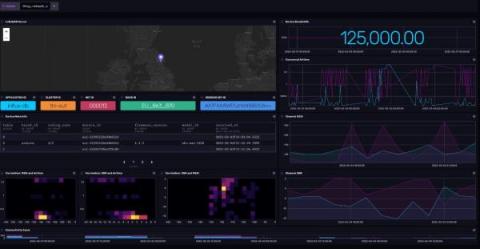
Revisiting The Things Network: Connecting The Things Network V3 to InfluxDB

Back in 2019, David Simmons created an awesome blog introducing LoRaWAN devices and The Things Network. He also showed you how easy it was to connect The Things Network V2 to InfluxDB. Since then, a few things have changed and I thought it was time to revisit the Things Network with a new project.

Ask Miss O11y: OpenTelemetry in the Front End: Tracing Across Page Load

Ah, good question! TL;DR: store the start time of the span, and then create the span on the new page. Usually, you want to start a span, do some work, and then end the span. The whole span gets sent to your OpenTelemetry collector (and thence to Honeycomb) when you end it. But when a page load happens, that span object is lost. Honeycomb never hears about it becausespan.end()wasn’t called. How can we deal with this? Create the span only on the new page, where you can end it. But!