UltimateSuite Launches Robotic Process Mining for Task Discovery
Company's New AI-Based Product Helps Organizations Identify Tasks at Scale to Automate or Streamline using RPA to Maximize ROI.


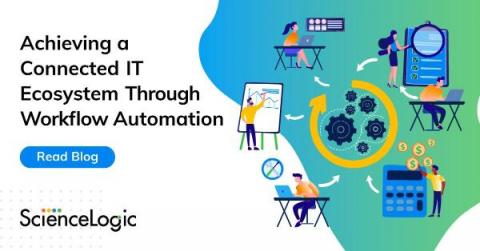
This blog outlines how the ScienceLogic SL1 platform kick starts your automation journey with automated workflows - your next step toward AIOps.
I hate to say this, but #Omicron is at the doorstep. According to the CDC website, there have been over 60M cases in the US so far. As a result, companies like Google and Apple are delaying returning to the office while some call the return date as now 'history'. Although we cannot predict the nature of the virus, we have some best practices to help our customers and IT manage their employee experience in a hybrid distributed environment.
Which cultural values empower businesses to thrive today? That's an open question, of course. But I suspect most employees, managers, and analysts would include items like collaboration, transparency, and creativity on the list of essential ingredients in business success. Indeed, you could argue that these values are at the core of a variety of modern organizational and technical innovations, from DevOps (which is all about collaboration) to open source software (which centers on collaboration and transparency) and the creator/maker movement (which is, of course, all about creativity).
2021 saw several ongoing trends in financial technology, or “fintech,” accelerate, as well as completely novel developments burst onto the stage. What will 2022 hold? Here are five predictions from my vantage point: Cybersecurity will be paramount. Modern-day hackers are going to continue to be aggressive in exploiting every avenue and opening in disrupting commerce and operations. The financial industry is on the front lines of cyberattacks with an extraordinary amount of exposure.
Feel like you're working through the same tickets and tasks over and over and over again? Breakout of your IT Groundhog Day time loop with the help of scripts and automation. Helpdesks and IT teams are inundated with repetitive, time-consuming, often low-value tasks that distract from larger strategic projects. With most IT leaders saying their staff is already stretched thin, this leaves little room for important projects that will lead to greater organizational productivity and efficiency.
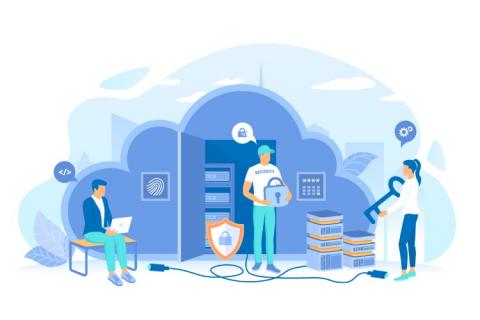
This article explores how to secure production Kubernetes clusters with the help of open source tools. As a prerequisite, you’ll need to have basic beginner-level knowledge of Docker and Kubernetes. In a nutshell, Kubernetes is a container orchestration tool and Docker is a containerization platform. Some of the most famous Kubernetes clusters managed by cloud providers include AWS EKS, Azure AKS, and Google CKE.
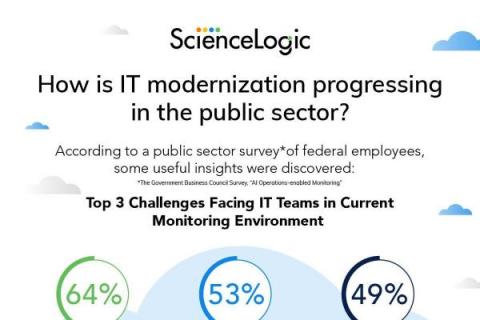
According to a public sector survey of federal employees, some useful insights were discovered.