Operations | Monitoring | ITSM | DevOps | Cloud

New year, New York, new CivoStack

When we first started our managed Kubernetes beta, we knew utilising K3s as the Kubernetes distribution of choice was the right move. Not only is it light-weight and quick to deploy, K3s has features ideally suited for the scenarios we envisioned our users would encounter. It’s important for us to make sure any service we offer is 100% compatible with industry standards, and K3s allows us to do just that but with simplicity and speed for our users.
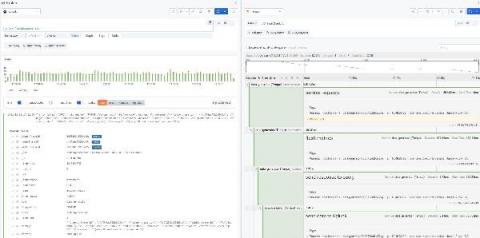

The Splunk plugin for Grafana now supports data links for jumping directly from logs to traces

Hey there! This is Éamon Ryan from the Solutions Engineering team. Very recently the Splunk data source plugin, which is available with a Grafana Enterprise license, had a new release: v2.1.0. While it added a few good bug fixes for edge cases, the biggest change, I think, was the addition of support for data links! Data links actually show up in a few places inside Grafana.

Taking an API-First Approach to Network Management

Application programming interfaces (APIs) allow applications to communicate, interoperate, and share information with one another. APIs have been mainstays at companies like Google, Salesforce, and other smaller but innovative organizations for decades. Now, they’re also common in the public sector, with a wide range of agencies actively using hundreds of APIs.

Hybrid IT Environments - Another Twist in the Complex World of Modern Applications

Running your IT infrastructure from the cloud can be a smart choice for modern businesses. Cloud computing allows you to build a scalable, flexible architecture at an affordable price. But few businesses are 100% on the cloud. Businesses may have legacy systems or specific resources that work better on-premises, or they may have made a significant investment in on-premises hardware.

Hybrid IT Environments - Another Twist in the Complex World of Modern Applications

Running your IT infrastructure from the cloud can be a smart choice for modern businesses. Cloud computing allows you to build a scalable, flexible architecture at an affordable price. But few businesses are 100% on the cloud. Businesses may have legacy systems or specific resources that work better on-premises, or they may have made a significant investment in on-premises hardware.

French Ministry of Armed Forces picks Elastic Cloud to fight COVID-19 and future pandemics

WaKED-CO (Watch of Knowledge on Emergent Diseases COVID-19) is an initiative launched in record time — deployed just a month after developing a prototype — under the leadership of the health service within the Ministry of Armed Forces in France. The project had one core mission: to make it easier to research the literature around the COVID-19 crisis.

7 Reasons Why Serverless Encourages Useful Engineering Practices

Serverless provides benefits far beyond the ease of management…it strongly encourages “useful” engineering practices. Here’s how. It’s hard to determine what can be considered a “good” or “bad” engineering practice. We often hear about best practices, but everything really boils down to a specific use case. Therefore, I deliberately chose the word “useful” rather than “good” in the title.

Talking Shipa - "What's New in 1.2?"

Shipa is excited to launch our new webcast series, Talking Shipa. To kick this series off, we sat down with Shipa Founder and CEO, Bruno Andrade, to discuss the release of Shipa Application Management Framework for Kubernetes, version 1.2. In this video, Bruno spends a few minutes with us to talk about the new features and improvements that are packed into this new release.

Visual Link Analysis with Splunk: Part 3 - Tying Up Loose Ends

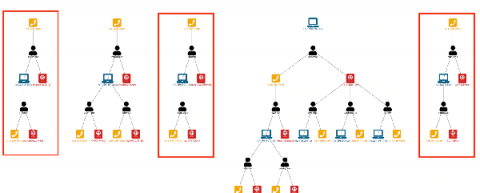
In my previous Link Analysis blogs, "Visual Link Analysis with Splunk: Part 1 - Data Reduction" and "Visual Link Analysis with Splunk: Part 2 - The Visual Part," I used techniques that work well when we have a controlled data set. However, as we know, real data can be messy. When analyzing links in fraud data, the data can be very noisy. Let’s say we want to use IP addresses for link analysis in the Splunk platform. It is not unusual for two people to share an IP address.