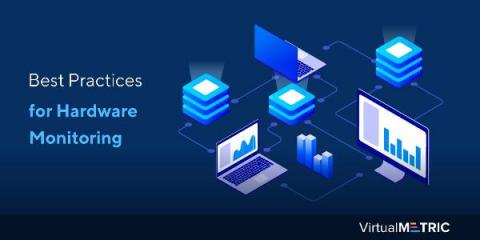
The biggest challenge in this regard is that a lot of the infrastructure comes from different manufacturers. While these manufacturers provide solid solutions for monitoring their hardware, it can be very difficult to oversee the monitoring of all hardware. A hardware monitoring software with an integrated console can monitor all the hardware in the server ecosystem. Hardware monitoring should be an integral part of managing a server and infrastructure.
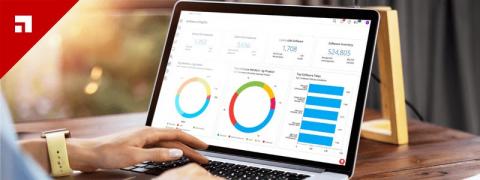
During my time at Ivanti, I have been close to numerous customers while helping them on their journey to achieving high levels of maturity in Software Asset Management. Over this period several glaring facts became apparent to me: I honestly felt that there must be something we can do to reduce the time to achieve this first—and seemingly straightforward—milestone of understanding the estate and answering the age-old questions of.
Not that system monitoring has much to do with NY Fashion Week or the most avant-garde venues in London’s Soho, but they share the yearning for something new, something fruitful and original. And since we are also some kind of modern hipsters obsessed with everything cool and trendy, today we will try to review some of those new trends in monitoring, the most recent news that affect our field.
Enterprises have relied on public cloud providers to shift and transform their legacy workloads using hyperscale infrastructure, but it is vital to ensure that business-critical services are running optimally. Cloud events help developers and operators understand how their workloads hosted on different cloud services are performing at any given time.
In this guide, let’s dive deep into Application Performance Monitoring (APM) and how it works. We’re going to establish the difference between monitoring and management. Additionally, understand how to leverage APM’s full potential and its role among the different parts of the organizations, not just the technical department. Modern applications bring value to every organization in today’s information age.
Site Reliability Engineering (SRE) is playing an increasingly pivotal role in supporting hybrid-cloud, DevOps environments, where Dev teams need to release updates fast and Ops need to avoid errors and failures in production. Powered by integrations to monitoring, orchestration, provisioning and ITSM tools, Interlink’s SRE solution brings improved understanding of where threats to the health of your IT services might lurk within DevOps workflows.
Downsampling is the process of aggregating high-resolution time series within windows of time and then storing the lower resolution aggregation to a new bucket. For example, imagine that you have an IoT application that monitors the temperature. Your temperature sensor might collect temperature data. This data is collected at a minute interval. It’s really only useful to you during the day.