Operations | Monitoring | ITSM | DevOps | Cloud

Migrating from IOpipe to Lumigo

You’ve no doubt heard that IOpipe has been acquired by New Relic (congratulations to both). As part of the acquisition, New Relic has said it intends to retire the IOpipe platform in the next 30 days. If you’re currently relying on the IOpipe platform to monitor and debug your serverless application you have an important decision to make. One option is to try out New Relic’s serverless monitoring functionality.
Postmortems vs. Retrospectives: When (and How) to Use Each Effectively

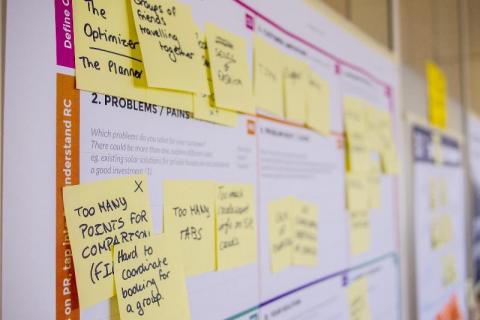
When we announced the launch of our Retrospectives Guide, we wrote about the value of scaling the continuous improvement mindset to beyond Product Development at PagerDuty by establishing the RetroDuty community. In this installment of our blog post series on retrospectives, I highlight the differences between postmortems and retrospectives. You might have heard of postmortems and/or retrospectives before reading our guides.

Network baseline: new technologies, new challenges

The issue of network baseline arose quite some time ago. Everything started from the understanding that networks are not static entities, but are a set of elements that change over time. It was also understood that networks are not only made up of physical and tangible elements, such as a router or a switch, but we must also have more abstract elements, such as the traffic pattern over a WAN link, for example.

How to Monitor AWS CloudTrail Logs with Sumo Logic

This is the third and last in a series of articles on Amazon CloudTrail. In the first part of the series, we introduced AWS CloudTrail and how it works and saw where and how it saves its data. We then learned how to query CloudTrail logs in the second part of the series where we used Amazon Athena to find meaningful information from large volumes of CloudTrail data.

Announcing the First Error Monitoring Solution for Salesforce Apex

We're very exited to bring all the error monitoring and debugging capabilities of Rollbar to Salesforce Apex applications. According to Salesforce, millions of developers and thousands of independent software vendors develop customized applications using Apex to extend the fuctionality of Salesforce. A few months ago, when some of our customers reached out and asked us for an error monitoring solution for their Salesforce Apex developers, our engineering team jumped on the task.

Pod Security Policies in production with Sysdig's Kubernetes Policy Advisor

Sysdig Secure 3.0 introduces Kubernetes Policy Advisor to provide Kubernetes native prevention using Pod Security Policies (PSPs). This feature automates the generation of PSPs and validates them pre-deployment, so they don’t break applications when applied. This allows users to adopt Pod Security Policies in production environments quickly and easily.