Operations | Monitoring | ITSM | DevOps | Cloud

Sustainability in the Age of AI

In the last few years, there has been a remarkable expansion in the benefits Artificial Intelligence (AI) offers. AI’s influence is pervasive everywhere, from voice-activated virtual assistants like Siri, Google Assistant, and Alexa to recommendation systems such as those employed by Netflix, Amazon, and Instagram and phone cameras that can provide real-time translation of text, signs, and menus. Nearly 77 percent of devices today use AI technology in one form or another.
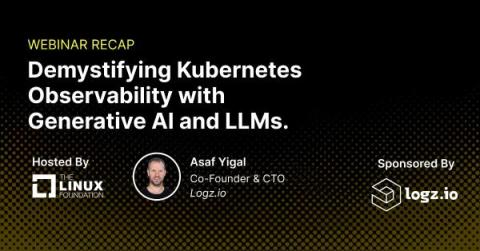
Demystifying Kubernetes Observability with Generative AI and LLMs

Generative AI and large language models (LLM) are fundamentally changing the way we interact with data, especially in the realm of Kubernetes and observability. These technologies are reshaping our field, and there is a lot to understand and unpack so organizations like yours can make sense of it all. What data is important, and what isn’t? How can LLMs make my day-to-day easier, and what do I need to do to ensure I don’t get overwhelmed?

The Best Unified Endpoint Management Software

Unified endpoint management (UEM) is powerful software that allows you to monitor, manage, and secure various devices—including mobile devices—and operating systems in a single dashboard. As its name suggests, it is a centralized management tool that simplifies work through automation, helping you and your IT team manage all your endpoint devices much more efficiently.

Introducing Civo's UK Sovereign Cloud: Secure, Compliant, and Locally Governed

In today's fast-paced digital world, where data breaches and geopolitical uncertainties are becoming more common, ensuring the security and sovereignty of your data is paramount. Organisations are increasingly seeking cloud solutions that not only offer advanced technological capabilities but also guarantee data compliance with local laws. Addressing this critical demand, Civo proudly introduces our UK Sovereign Cloud.

Pipeline Module: Event to Metric

At the most abstract level, a data pipeline is a series of steps for processing data, where the type of data being processed determines the types and order of the steps. In other words, a data pipeline is an algorithm, and standard data types can be processed in a standard way, just as solving an algebra problem follows a standard order of operations.

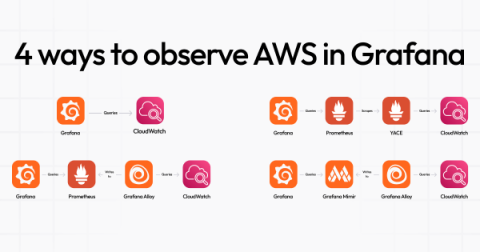
How to visualize Amazon CloudWatch metrics in Grafana

In the wide world of observability, you have many options for visualizing metrics collected by Amazon CloudWatch. And because of that, you’re often left making lots of decisions — about cost, configurations, flexibility, and more. At Grafana Labs, we stick to our “big tent” philosophy, which means we don’t force you into a decision or even tell you that you have to bring your CloudWatch metrics to Grafana Cloud.

The Impact of AI on Cybersecurity

Artificial intelligence (AI) is seemingly everywhere in today’s tech landscape. The hype cycle is in full flow, especially regarding the use of large language models (LLM) for generative AI like OpenAI ChatGPT, Google Gemini and Anthropic Claude. Indeed, many tech companies are determined to add LLM into products where it sometimes seems tacked on.

Making Use of Previous State in Icinga2 Check Commands

When writing a custom check plugin for Icinga 2, there are situations where in addition to observing the current state of a system, taking the past into account as well can be helpful. A common case for this is when the data source provides counter values, i.e. values that increase over time and you are less interested in the current value but more in how it changes.