Operations | Monitoring | ITSM | DevOps | Cloud

Loki 3.0 release: Bloom filters, native OpenTelemetry support, and more!

Welcome to the next chapter of Grafana Loki! After five years of dedicated development, countless hours of refining, and the support of an incredible community, we are thrilled to announce that Grafana Loki 3.0 is now generally available. The journey from 2.0 to 3.0 saw a lot of impressive changes to Loki. Loki is now more performant, and it’s capable of handling larger scales — all while remaining true to its roots of efficiency and simplicity.

Grafana 11 release: The latest in visualizations, Scenes-powered dashboards, simple access controls, and more

At the opening keynote of GrafanaCON 2024, attendees in Amsterdam got a sneak peek at some of the latest features in Grafana 11, which is now available in preview. Grafana: download now! For those of you who couldn’t score a ticket to the sold-out event, don’t worry — we have a roundup of all the latest updates to visualizations that make it easier than ever to create beautiful dashboards in Grafana.

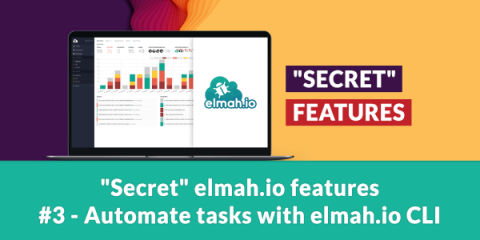
"Secret" elmah.io features #3 - Automate tasks with elmah.io CLI

In this third post in the series of "secret" elmah.io features, I want to introduce you to the elmah.io Command Line Interface (CLI). While you probably spend most of your elmah.io-related time inside the UI, the CLI offers some interesting possibilities not available through the web app. In this post, I'll show what I believe are the two most usable and helpful features of the elmah.io CLI. There are a lot of sub-commands so feel free to play around with it.

From Reaction to Action: Accelerating Incident Response through Automation

In the Digital Age, IT incidents are an unavoidable aspect of business operations. From hardware failures to security breaches, these disruptions can wreak havoc on business continuity and user experience. Managing these incidents effectively requires a timely, systematic approach encompassing detection, prioritization, resolution, and communication. Traditional incident response methods often fall short, resulting in costly delays and inefficiencies.

Reliable Backups in a Multi-Cloud World

Proper backups are universally acknowledged as essential, yet they grow increasingly tedious and prone to error as DevOps complexity escalates. While some managed database services offer automated backup solutions, the scope of your backup requirements is likely to expand as the business and products scale. There's a considerable chance you'll find yourself hosting your own databases or stateful services, a task that can seem daunting in its demand for precision and reliability.

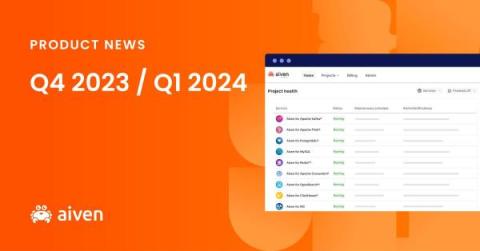
What's new at Aiven: Q4/2023 - Q1/2024

Optimize data infrastructure with the power of AI. Upgrade open source data services and reduce costs with self-service BYOC on AWS. The Aiven team strives to enhance our platform with new features to enable organizations to innovate rapidly and manage their growing data infrastructure efficiently. In case you missed some of our newest product news, we’ll take a glimpse here so you can discover our latest developments!

How to secure mission-critical work

The average data breach already costs organizations $4.45 million, and it appears that damages will only become more expensive as time goes on. In fact, one report found that cybercrime will cost the world $10.5 trillion by 2025. While organizations can’t necessarily prevent hackers from targeting their systems, they can take proactive steps to strengthen cybersecurity and develop incident response plans that enable them to keep bad actors at bay and swiftly address incidents whenever they occur.

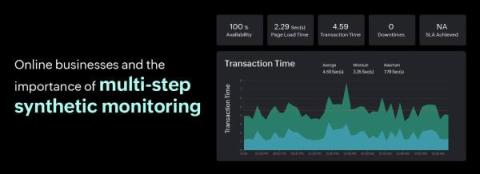
How can multi-step synthetic transaction monitoring help your online business?

Multi-step synthetic transactions, also known as multi-step transactions or multi-step scripts, are automated tests that simulate complex user interactions with a website or web application. Unlike a single-step transaction (like page load), multi-step transactions involve a series of sequential steps or workflows that mimic real-world user journeys.

Simplified device health monitoring and mapping for software-defined networks

Are you juggling too many different types of network monitoring dashboards at once? If you're using software-defined networks (SDNs) and also managing traditional networks, it can be quite challenging to monitor them both at the same time since you need to remember which tool is responsible for monitoring which network and keep switching between them. Doing this can be a real hassle, but worry not!