Operations | Monitoring | ITSM | DevOps | Cloud

7 Ways Digital Platforms Are Revolutionizing Business Models

Businesses worldwide use digital platforms to innovate their business models in the current digital era. From small startups to large enterprises, companies use technology to upend existing business practices and seize new ones. Digital platforms offer new value creation ways, customer reach, and operational efficiency. Entrepreneurs and business people must learn to use these digital tools to remain competitive.

Sponsored Post

Enterprise Incident Management: Guide & Best Practices

In today's rapidly evolving technological landscape, incident management has become a critical discipline for enterprises to ensure uninterrupted operations and an optimal customer experience. Effective incident management involves a systematic approach to promptly detecting, responding to, and resolving incidents.

How Technology Impacts the Book Industry

In today's digital age, technology plays a pivotal role in shaping various industries, and the book industry is no exception. The advent of digitalization has revolutionized the way books are published, distributed, and consumed, leading to significant transformations in the publishing landscape. In this blog, we'll explore the profound impact of technology on the book industry, from the rise of digital publishing to the emergence of self-publishing authors and the integration of innovative reading experiences.

Elevating Code Reviews: Strategies for Distributed Teams

With more developers working remotely, traditional code reviews have begun to shift. Classic water cooler conversations have turned into pings on Slack, and collaborative office spaces have transformed into stand-alone home setups. Remote work clearly has many advantages, but it can also leave developers feeling isolated. Asynchronous communication introduces massive bottlenecks for efficient feedback and creative brainstorming, particularly during code reviews.

How to Manage Sensitive Log Data

According to Statistia, the total number of data breaches reached an all-time high of 3,205 in 2023, affecting more than 350 million individuals worldwide. These breaches primarily occurred in the Healthcare, Financial Services, Manufacturing, Professional Services, and Technology sectors. The mishandling of sensitive log data provides an on-ramp to many of the most common attack vectors.

AI and automotive: navigating the roads of tomorrow

I had the pleasure to be invited by Canonical’s AI/ML Product Manager, Andreea Munteanu, to one of the recent episodes of the Canonical AI/ML podcast. As an enthusiast of automotive and technology with a background in software, I was very eager to share my insights into the influence of artificial intelligence (AI) in the automotive industry.

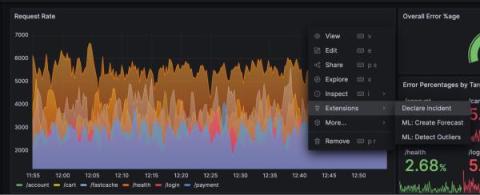
A better Grafana OnCall: Seamless workflows with the rest of Grafana Cloud

Incident response and management (IRM) doesn’t happen in a vacuum. Your ability to respond to issues in a timely manner depends greatly on how well your on-call engineers can use their IRM tooling and observability tools together to understand what changed and why.

AI's Role In Streamlining Kubernetes Operations For Better Cost Management

While many of us have already heard of Kubernetes, or may even be leveraging it within our technology stacks, it’s still important to remember that the platform is undergoing massive adoption and evolvement. Due to its relative infancy, Kubernetes is ripe to allow for integrating new technologies, like Artificial Intelligence (AI) and Machine Learning (ML). As an open-source platform, Kubernetes orchestrates containerized applications, ensuring they run efficiently and resiliently.

16 Best Uptime.com Alternatives For Uptime Monitoring in 2024

Monitoring website uptime is critical for ensuring it stays accessible and runs effectively. While Uptime.com has been recognized for these services, the evolving digital landscape necessitates exploring other tools that offer enhanced uptime monitoring features. This introduction explores top alternatives to Uptime.com, aimed at guiding users toward a solution that best matches their needs.

Feature Friday #3: execresult_as_data()

When you want to inspect both the return code and output from a command execresult_as_data() might be the function you are searching for. Most CFEngine policy writers have used execresult() and returnszero(). They are useful when you want to do something based on the output of a command or based on its successful execution (returning zero). For example: /tmp/feature-friday-3.cf command output But, sometimes, you care about specific return codes.