Operations | Monitoring | ITSM | DevOps | Cloud

Why the $24 Billion CCaaS Industry Is Rebuilding Itself From the Ground Up

At its annual customer conference in June 2026, the vendor holding the largest revenue share in the global CCaaS market announced a full repositioning of its platform around agentic AI. Its stated reason: “the era of bolted-on AI is over” (CX Today, June 2026).

Cloud Outage Incident Response: Lessons From 2026

Cloud outage incident response stopped being a hypothetical exercise this summer. In a single stretch of July 2026, three of the biggest cloud providers stumbled in quick succession, and the ripple effects reached apps that millions of people use every day. If your team runs anything on a hyperscaler, the events of the last few weeks are a direct message: the question is no longer whether your provider will have a bad day, but whether your on-call rotation is ready when it does.

Kepler Is in Public Preview: One Task, Every Repo, Every Agent

A faster car doesn’t get you home faster if the freeway is still jammed. That is the problem most teams run into once they add a second, third, or fourth AI coding agent to the mix. More agents generate more code. They do not automatically generate more finished work, because someone still has to track which agent is waiting on input, which one just opened a pull request, and which one has been quietly stuck for twenty minutes. Kepler is GitKraken’s answer to that traffic jam.

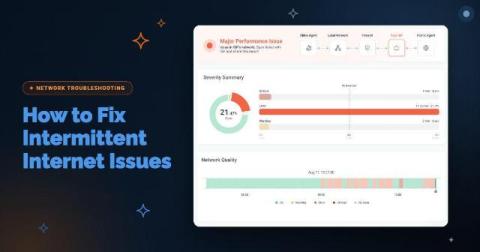
8 VoIP Quality Metrics: What They Are and How to Measure Them

A dropped call costs more than the interruption itself. It means a missed deal, a frustrated customer, or a support ticket that shouldn't exist. When VoIP quality slips, the usual first sign is vague: calls "sound bad" or "keep cutting out," with no clear starting point for troubleshooting. That vagueness is avoidable. VoIP call quality isn't subjective at the network level.

The best ways to visualize API responses in 2026

APIs power almost everything we use today, from cloud platforms and monitoring tools to ticketing systems and internal applications. But no matter how useful an API is, the response usually arrives as raw JSON. That's perfectly fine for machines, but much less convenient for people. Whether you're debugging an endpoint, exploring a new service, or building dashboards for your team, you'll probably want a better way to visualize that data. Fortunately, there are several ways to visualize API responses.

Ubuntu 26.04 LTS Resolute Raccoon is Now Supported!

We are excited to announce support for Ubuntu 26.04 LTS Resolute Raccoon on all Cloud 66 products, including registered servers. From this point onward, new applications are provisioned on Ubuntu 26.04 by default, on both x86_64 and ARM64. Don't forget, you can control your target Ubuntu version via the selection dropdown when scaling up via the UI, or through your manifest!

Closing the AI gap: How next-generation knowledge access unlocks mission outcomes for government

A recent IDC Spotlight report based on a survey of 685 public sector respondents found that 72% describe scaling AI from pilot to production as "very" or "somewhat" difficult.¹ Choosing the right model is only part of the challenge. Agencies also need to get their data ready for AI.

Cloud Outage Preparedness: On-Call Lessons for 2026

Cloud outage preparedness stopped being a nice-to-have this month. In a span of roughly 48 hours, Microsoft Azure lost a big chunk of its West US footprint and Amazon Web Services dropped connectivity between its us-west-2 region in Oregon and the Seattle metro. The AWS event alone rippled outward and knocked DoorDash, Reddit, Hulu, Apple Pay, Snapchat, Fortnite, and the PlayStation Network offline for millions of users, according to incident trackers. Neither outage was caused by anything exotic.

Don't pay for metrics, pay for change: The 2026 guide to engineering metrics

Most engineering leaders are drowning in data but starved for insight. We have dashboards full of metrics, but they often create more questions than answers and rarely tell us what to do next. In the age of AI, where development velocity is accelerating at an unprecedented rate, this problem is only getting worse. Shipping code faster than you can fix it is an existential risk, and a dashboard that doesn't lead to action is just a distraction.