Most SREs and IT Ops manage Java applications without source code access or communication with AppDev teams. When applications have performance issues those SREs or IT Ops teams deploying and maintaining the infrastructure often have to prove that it is the application at fault and supply information to the app supplier which provides evidence of the issue.
Project management is a clear-cut routine where assets are wisely handled to reach objectives and fulfill success requirements within a set period. Tasks include preparing, organizing, safeguarding, overseeing, and control. Likewise, it has an exact beginning and ending, and aspires to develop something extraordinary, such as a report, service, or result. Handling a project is tricky. You have to reach your targets while watching out for limits like range, schedule, quality, and budget.
As technology continues to advance at a rapid pace, a new frontier has emerged in the world of networks - the automated edge. But what exactly does this mean for business and why does it matter? In simple terms, automated edge refers to self-configuring, self-optimising, and self-healing capabilities being built into edge devices and software.
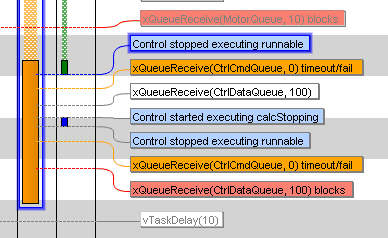
Tracing of “runnables” is a fairly new feature in Percepio Tracealyzer, added in v4.7.0. One of our automotive customers needed this feature to make ISO 26262 certification of their Electronic Control Unit (ECU) software easier. In order to properly allocate ECU functions to tasks and to cores, and to ensure that they meet the budgeted resources, it is useful to know execution times, response times and wait times for each task and runnable.
Years before founding Logz.io, I was a software engineer, working with various tools to ensure my products and services performed correctly. There were few tools I dreaded using more than application performance management (APM), and I know that I’m not alone. I hated traditional APM. It’s heavy. It’s hard to implement. It’s expensive. It takes a very long time to derive business value.