Operations | Monitoring | ITSM | DevOps | Cloud

Factors Affecting Website Page Loading Speed & Optimization Strategies

The speed at which your website pages load can affect the overall user experience. Slow page loading times can lead to higher bounce and lower conversion rates, as users may become frustrated and leave the site before engaging. Optimizing your website's page loading speed helps improve user experiences, increases search engine rankings, and drives more traffic to your website.


How to Find and Fix Elasticsearch Unassigned Shards

When a data index is created in Elasticsearch, the data is divided into shards for horizontal scaling across multiple nodes. These shards are small pieces of data that make up the index and play a significant role in the performance and stability of Elasticsearch deployments. A shard can be classified as either a primary shard or a replica shard. A replica is a copy of the primary shard, and whenever Elasticsearch indexes data, it is first indexed to one of the primary shards.

Sysdig Validated as AWS CloudOps Competency Launch Partner

This week AWS unveiled its new Cloud Operations Competency–aka the CloudOps Competency–designed to recognize qualified partners who help cloud customers build and manage hybrid cloud environments securely and efficiently. Sysdig is a launch partner and is now validated for the AWS CloudOps Competency in Compliance and Auditing, as well as Monitoring and Observability categories.

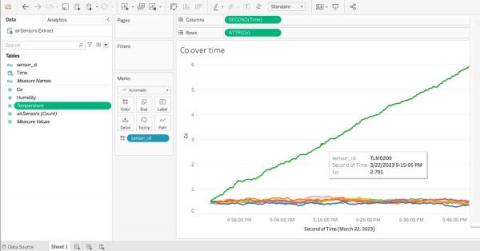
Forecasting and Visualizing Time Series with Tableau and InfluxDB Cloud

Data analysis is a crucial aspect of any business or organization because it helps with making informed decisions and improving overall performance. However, with the vast amounts of data generated every day, it can be overwhelming to manually analyze and derive insights from it.

Securing Azure Blob Storage

Azure Blob Storage is a versatile, scalable, and cost-effective cloud storage service provided by Microsoft. It is designed to store a wide range of data types, including unstructured data such as images, videos, audio files, and documents. As businesses increasingly rely on cloud storage for critical data, ensuring the security of Azure Blob Storage becomes a top priority.

Why Organizations Should Invest in Endpoint Hardening and Automation

Endpoint (or device) hardening is the concept of reinforcing security at the device level. Because securing endpoints is fundamental to every other security action you take, it’s important to invest as much as you can into endpoint hardening. According to research conducted by Ponemon with Keeper Security, 81% of businesses experiencing an attack in 2020 were faced with some form of malware. Other forms of attack also included credential theft, compromised/stolen devices, and account takeover.

Backup as a Service: Overview & Solutions

While the cost of data loss for businesses is currently increasing, Teramind’s data loss statistics show that automated data loss prevention measures help save 3.58 million per breach. Backup as a Service (BaaS) is a service that allows businesses to outsource their data backup to a third party, thus removing the need to backup data at a local workspace. This overview will provide a closer look into BaaS to help you decide if it’s the right choice for your organization.

Webinar Recap: Unlocking Business Performance with Telemetry Data

Telemetry data can provide businesses with valuable insights into how their applications and systems are performing. However, leveraging this data optimally can be a challenge due to data quality issues and limited resources. Our recent webinar, "Unlocking Business Performance with Telemetry Data", addresses this challenge.

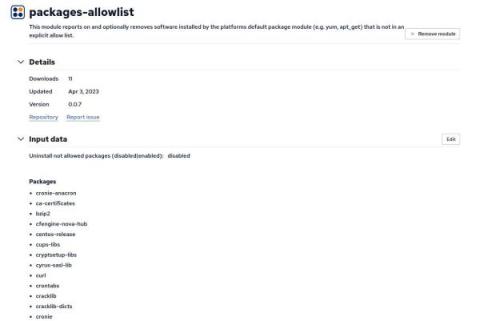
Improved software compliance with packages-allowlist

Having a list of software that is allowed to be installed on a host is a strategy to prevent and fix security gaps and maintain compliance with operational guidelines. This zero-trust methodology ensures that only explicitly permitted applications are allowed to be present on a host unlike package block-listing which enumerates an explicit list of software that is not allowed to be present. In fact, with a software allow-list, you are essentially block-listing everything except the software you allow.