Operations | Monitoring | ITSM | DevOps | Cloud

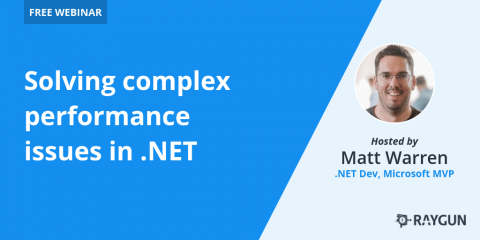
Solving complex performance problems in .NET Core [Webinar]

“It’s very much clear that .NET Core is the way going forward. Certainly new features and very much performance rated features seem to be only going in one direction. So, there’s this added incentive to move over.” - Matt Warren, performance expert at Raygun. Today, our host Andre talks to Matt Warren, .NET (C#) Developer at Raygun and Microsoft MVP.


How Opsgenie achieved 99.999% uptime over the last 12 months

At Opsgenie, our highest priorities are uptime and performance; our product’s very purpose is to enable our customers to keep their always-on services on – always. The Opsgenie team has achieved 99.999% uptime over the last 12 months, during which we enhanced our platform with new features and integrations and joined the Atlassian family.

Kamon Just Got a Lot Easier to Use, Welcome Kamon 2.0!

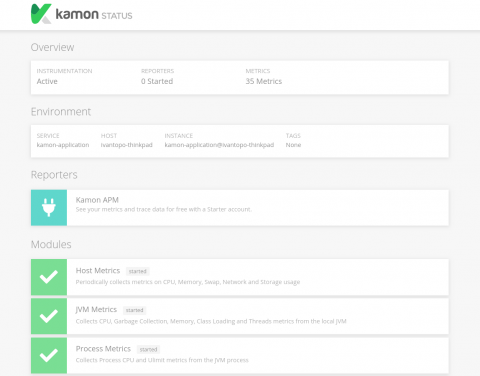
Dear community, Kamon 2.0 is out and ready to roll! For this release we focused primarily on simplifying the installation proces and making sure that the core APIs are more solid and user friendly, since they will be the foundations upon which we will instrument the whole JVM world in the months to come!

An Introduction to Python 3.7 Data Classes

Sometimes it’s fun to just nerd out for a moment. Python is one of the most popular scripting languages today and we love it too. That’s one reason why LogicMonitor can execute any script or programming language supported by your environment. That means can enjoy the latest features of your favorite languages in your favorite monitoring tool (right?). If Python is your vice, give Python 3.7’s Data Classes a try!

5 reasons to use Kubernetes

Kubernetes is the de facto open source container orchestration tool for enterprises. It provides application deployment, scaling, container management, and other capabilities, and it enables enterprises to optimize hardware resource utilization and increase production uptime through fault-tolerant functionality at speed. The project was initially developed by Google, which donated the project to the Cloud-Native Computing Foundation. In 2018, it became the first CNCF project to graduate.

New features for Ruby and Rails applications with a new version of the Honeycomb Beeline for Ruby

We are excited to announce a new version of the Honeycomb Beeline for Ruby! This new version solidifies our Ruby support, providing out-of-the-box automatic instrumentation for additional frameworks and enhanced support for our currently supported frameworks. The goods: For Rails applications we now have a generator that creates a configuration file for the Beeline. This generates a configuration file in config/initializers/honeycomb.rb with the Beeline pre-configured for your Rails application:

20 Simple Python Performance Tuning Tips

Python is a powerful and versatile higher-order programming language. Whether you’re developing a web application or working with machine learning, this language has you covered. Python does well at optimizing developer productivity. You can quickly create a program that solves a business problem or fills a practical need. However, the solutions you reach when developing quickly aren’t always optimized for python performance.

10 tools to get the most out of your CRO

Conversion rate optimization (CRO) is the method used in internet marketing for booming the fraction of visitors to a website that converts into clients. The CRO procedure includes the understanding of visitors navigation through your site, the actions performed by them like filling of form for a deal, and what’s the reason some visitors have abandoned the shopping cart in between, etc.

Announcing Graylog 3.1 Beta 3

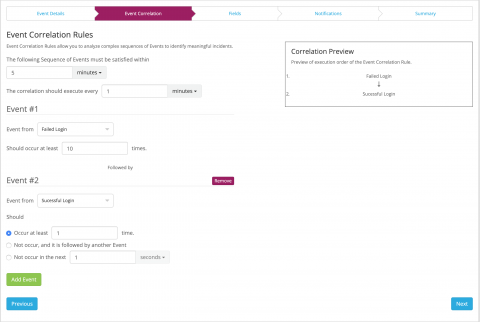
Today we are releasing the next public beta of Graylog v3.1. This release brings a whole new alerting and event system that provides more flexible alert conditions and event correlation based on the new search APIs that also power the views. In addition, some extended search capabilities introduced in Graylog Enterprise v3.0 are now available in the open source edition in preparation for unifying the various search features.