Operations | Monitoring | ITSM | DevOps | Cloud

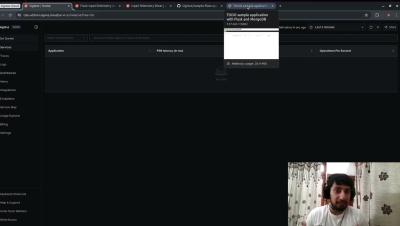
Why "page.goto()" is slowing down your tests

In this video, we dive into Playwright's "page.goto()" and understand why it could be slowing down your end-to-end tests. We start with an example script and then walk you through the Playwright UI mode to understand how resource loading can delay the "page.goto()" call. We also look into the different "waitUntil" configurations and check how they affect the speed of your tests. Enjoy, and drop any questions or comments below!

The Future of Azure Messaging Services with Clemens Vasters

In this episode of Azure on Air from the INTEGRATE Summit, Clemens Vasters, Azure's messaging platform architect, shares exciting updates and insights. Highlights include geo-replication for Service Bus and Event Hubs, processing 10 trillion transactions daily, Event Grid enhancements, MQTT support expansion, and Microsoft Fabric integration. Clemens also discusses the role of AI in messaging and introduces new developer tools like the Event Hubs emulator. Don't miss his thoughts on the Azure Relay, a crucial yet often overlooked service.

Python Flask instrumentation using OpenTelemetry | SigNoz

In this video, you will learn how to instrument your Python Flask application using OpenTelemetry and monitor your trace data in SigNoz. Link to Document used in this video More about SigNoz: SigNoz - Monitor your applications and troubleshoot problems in your deployed applications, an open-source alternative to DataDog, New Relic, etc. Backed by Y Combinator. SigNoz helps developers monitor applications and troubleshoot problems in their deployed applications. SigNoz uses distributed tracing to gain visibility into your software stack.

How to run fault injection tests on AWS managed services

Part of the Gremlin Office Hours series: A monthly deep dive with Gremlin experts. Fully-managed SaaS services offer incredible scalability and accessibility, but at a cost: they’re also single points of failure. If your application depends on a SaaS service and the service fails, guess who your customers will blame? We need to design applications to anticipate and work around managed service failures, but how do we do that without having to wait for the service to fail?

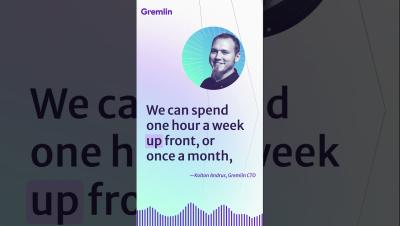
Spend a little time on software reliability now instead of a lot of time later

You're going to spend time fixing reliability—but it's your choice whether it's during an outage or ahead of time on your schedule and for less costs. Which will you choose? "We all know when things go wrong, it cost us a million dollars and it was really bad. Let's have that never happen again. But when we say, I need every engineering team to spend one hour, one day a week on reliability, does everyone lose their mind, or is that a reasonable request? Can we amortize out the cost of that?