The latest News and Information on Monitoring for Websites, Applications, APIs, Infrastructure, and other technologies.
It’s no secret that employee happiness and productivity often go hand-in-hand. But just how much impact does an employee’s happiness have on productivity – and is this a question that should concern IT leaders? It’s not exactly news that employees want to feel happy at work – but during the Great Resignation, we’re now seeing what lengths they’re willing to go to when they’re unhappy with their current employers.
Although time series data can be stored in a MySQL or PostgreSQL database, that’s not particularly efficient. If you want to store data that changes every minute (that’s more than half a million data points a year!) from potentially thousands of different sensors, servers, containers, or devices, you’re inevitably going to run into scalability issues. Querying or performing aggregation on this data also leads to performance issues when using relational databases.
Today, cloud native technologies empower a number of organizations to build and run scalable applications in public, private and hybrid cloud environments. Developer and operation teams can build and deploy applications, APIs and microservices architectures with the speed and immutability of containers. Gartner predicts that by 2024, more than 75% of large enterprises in mature economies will be using containers in production.
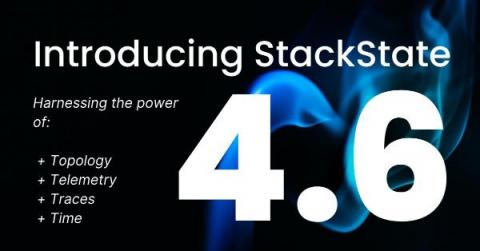
Companies depend on observability insights to provide reliable online services to their customers. To support their efforts, StackState is proud to announce a new version of our unique topology-powered observability software, StackState v4.6, available now. This new version brings powerful new capabilities to DevOps and SRE teams who need to maintain a deep understanding of how their stack is behaving to meet their SLOs.
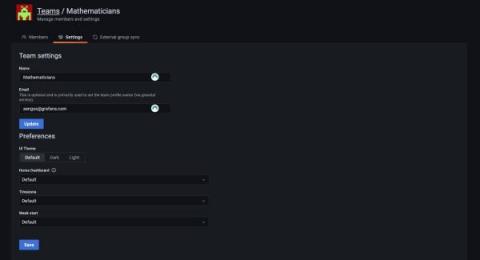
Almost every company who sets up Grafana as part of an observability or data visualization service has multiple teams, divisions, or customers of their own to serve.
Race conditions can occur when a multithreaded application accesses a shared resource using over one thread. Unless we have guards in place, the result might depend on which thread “got there first”. This is especially problematic when the state is changed externally. A race can cause more than just incorrect behavior. It can enable a security vulnerability when the resource in question can be corrupted in the right way. A good example of race condition vulnerabilities is mangling memory.
Some background. Having implemented at least 20 or more APM systems in production as an end-user at various companies, and both deployed and managed countless monitoring tools outside APM, I understand the role of the practitioner. Later on, I shifted to Gartner and led the APM Magic Quadrant for four years, finally spending another four years at AppDynamics (operating under Cisco after two years).