Operations | Monitoring | ITSM | DevOps | Cloud

The latest News and Information on Monitoring for Websites, Applications, APIs, Infrastructure, and other technologies.

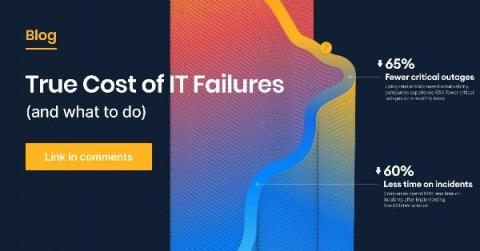
The True Cost of IT Failures (and What to Do Instead)

In this age of digital transformation, any issues with your IT infrastructure can cause major disruptions to your business. On top of this, IT environments that support critical business applications continue to get more complex and dynamic. As failures, outages, and incidents increase in volume and cost, the risk of an outage within your company becomes a very expensive one.


Show Your Query You Love It By Naming It

Honeycomb is all about collaboration: We believe that observability is a team sport, and we want to give you as many tools to help your team get the ball down the field (i.e., untangle knotty problems) as we can. We want you to be able to share the current state of your work so that others can follow and figure out what’s up, and we want you to leave breadcrumbs so the next time you’re stuck here, you can find your way back.

Splunking AWS ECS Part 2: Sending ECS Logs To Splunk

Welcome to part 2 of our blog series, where we go through how to forward container logs from Amazon ECS and Fargate to Splunk. In part 1, "Splunking AWS ECS Part 1: Setting Up AWS And Splunk," we focused on understanding what ECS and Fargate are, along with how to get AWS and Splunk ready for log routing to Splunk’s Data-to-Everything platform.

A Partnership Between InfluxData and Ockam Brings Trust to Time Series Data

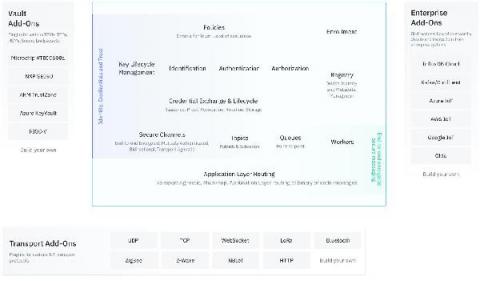
This article is a re-post of the article written by Matthew Gregory and published on the Ockam blog. Let’s investigate how to build applications with trusted time series data in a zero trust environment! To trust an application we need to trust the data that feeds into it. Increasingly, applications rely on time series data from outside the datacenter, at the edge, or in IoT. This means we need to think of trust and data in new ways.

Surveying the Tides of Cloud-Native & Open Source Observability

We can plausibly say the enterprise development market turned the tide on cloud-native development in 2020, as most net-new software and serious overhaul projects started moving toward microservices architectures, with Kubernetes as the preferred platform.

Hosted Prometheus vs. Hosted Graphite

In this article, we will discuss major features, differences, and similarities of the open-source monitoring tools known as Prometheus and Graphite. We will then dive into how you can benefit from MetricFire’s hosted Prometheus and Graphite. Lastly, we will explain why, given the choice, hosted Graphite could be a better monitoring option for you. MetricFire provides comprehensive monitoring solutions with Hosted Prometheus and Hosted Graphite.

How to monitor your Website in just 2 simple steps?

In this video, you’re going to learn exactly how to monitor your Website in just 2 simple steps! To be clear: Monitoring a Website is a lot of hassle. But with this video tutorial, you’ll know how you can monitor your Website in just 2 simple steps while saving a lot of time. Think of Components like folders that contain other Fyipe resources and one of the resources it has is called "Monitors". A website monitor will basically test your Website for availability, performance, and function. I'll also show you how your team is alerted when your website goes down.

Making CI/CD work with serverless

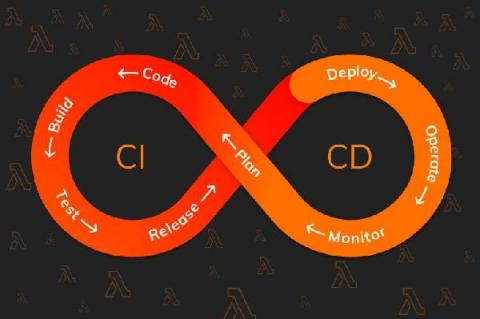
“Serverless computing is a cloud-computing execution model in which the cloud provider runs the server, and dynamically manages the allocation of machine resources. Pricing is based on the actual amount of resources consumed by an application.” — “Serverless Computing”, Wikipedia This mundane description of serverless is perhaps an understatement of one of the major shifts in recent years.