The latest News and Information on Monitoring for Websites, Applications, APIs, Infrastructure, and other technologies.
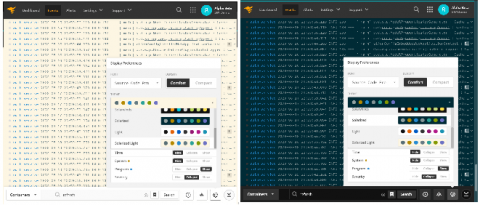
In today’s Tip of the Day, we will be looking at some of the highlights in our new release: Gullfoss. Named after the spectacular 32 meters waterfall in Iceland, our latest release is no less impressive. All the Catchpoint releases in 2020 have focused on the GUI, workflows, and getting you the answers you need in as few clicks as possible.
Thanks to awesome contributions from the community and the hard work of our integrations team, the Honeycomb Rails integration comes with lots of great features out of the box. This post is an end-to-end tutorial to show you exactly the steps involved, from creating a new Honeycomb team to getting your data in and observing your app in production.
Being able to easily monitor the health of all your sites and services from multiple global locations is a powerful tool for site reliability. However, no one wants to sit and stare at a status dashboard all day. Naturally, teams want to be alerted when there is an issue. We can do that with alerting in Kibana. And when coupled with Elastic machine learning, alerts can be automatically generated from anomalies that are automatically detected. That’s the power of Elastic Observability.
If you’ve heard of the term “serverless architecture” but you have no idea what it means, don’t feel bad. This buzzword (buzz-phrase?) has been on the rise for the past few years, and it doesn’t look like it’s going to stop. More and more cloud companies are trying to promote serverless architectures for businesses. There are plenty of benefits to using a serverless architecture for your business.
We examined best practices for logging in a prior series. However, how can you apply those best practices in real life? Let’s dive into how you could use LogDNA in an opinionated manner to utilize best practices to bring value to your DevOps-focused projects. How can we ensure we follow best practices and keep our logs secure and compliant as noted in the previous series? Let’s pretend we’re setting up centralized log management with LogDNA for a new team and project.
In this post, we’ll review some common InfluxDB Cloud 2.0 errors for beginners. We’ll discuss probable causes as well as recommended fixes. This blog uses the Telegraf System Configuration and data as an example to illustrate the various errors you may encounter. Having some familiarity with this dataset is useful in understanding the issue and the resolution.
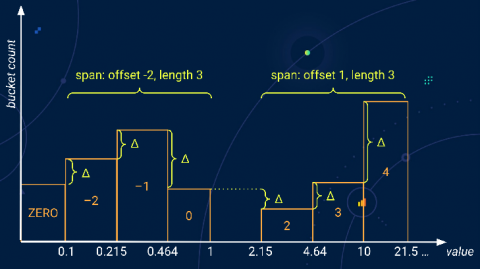
It’s only four months ago that I blogged about histograms in Prometheus. Back then, I teased my talk planned for (virtual) KubeCon Europe 2020. On Aug. 20, the talk finally happened. It completed the trilogy of histogram talks also mentioned in my previous blog post. Here is the recommended viewing order.
Logs in continuous delivery pipelines are often entirely ignored, right up until something goes wrong. We usually find ourselves wishing we’d put some thought into our logs, once we’re in the midst of trawling through thousands of lines. In order to try to prevent this, we can add DevOps metrics into our logs, which will provide us with greater observability, and give insight into anything going wrong in our pipelines.