Operations | Monitoring | ITSM | DevOps | Cloud

The latest News and Information on Monitoring for Websites, Applications, APIs, Infrastructure, and other technologies.

PHP vs Python: Which Should You Choose in 2020?

There are dozens of great languages to learn. Today we’ll be breaking down the differences between two of the best: PHP vs Python. Which one is best for your application? Which is going to give you the best return on your development time? We’ll pit these two head-to-head and find out which is the best choice for you.

How to Fix JavaScript Errors

My computer programming teacher had always told me that 10% of our time is spent developing 90% of our application, and the other 90% of our time finishing the last 10% of our project. Even with a good project plan and a concept that makes logical sense, most of our time will be consumed with fixing errors. Moreover, with JavaScript, our application can run without obvious errors preventing it from being run, so we have to employ several techniques to make sure everything is running smoothly.

FullStory - Enhancing Digital Experiences Building Relationships

Customer experience is a key factor in competitive differentiation in the digital economy. The online business model has changed, and today, the focus has shifted from brands to customers. It would not be an exaggeration to say that customer experience plays a central role in any business model.

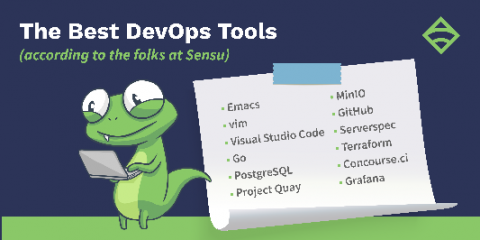
The best DevOps tools (according to the folks building Sensu)

Because Sensu is a tool made for (and by!) operators, I wanted to share our own favorite tools in the DevOps ecosystem (aside from Sensu, of course!). I surveyed the fine folks who work at Sensu on what their favorite DevOps tools are, and why. And while we don’t always agree on a specific tool (everyone has their own favorite text editor), it’s safe to say that open source is a constant theme. Read on to learn about our tools of choice for editors, programming, storage, IaC, and more.

Migrating Production Data in Elixir

When requirements change for your product, there arises a need to change not only the codebase but also the existing data that already lives in production. If you’re performing the changes locally, the whole process seems fairly simple. You test your new feature against a sparkling clean database, the test suite is green, and the feature looks great. Then you deploy, and everything goes to hell because you forgot that production was in a slightly different state.

Why would Modern Businesses need Event Correlation?

Network management is undoubtedly crucial as there is a constant need to pin-point as well as fix the issues quickly whether it’s on premise or on cloud. The more complex and distributed a network becomes, the more alarms or alerts the system generates. Just knowing that something has gone wrong in your network is not enough, you should know the details like why it happened, when it happened, where it started, and what triggered it.

Get More From Sentry With Our PagerDuty Integration

Much like the pagers of yore, PagerDuty immediately notifies the right person when something goes wrong. That means that no matter when there’s an issue in your application, the right people on your team will hear about it. But as much as we love PagerDuty, we’re not using valuable company time and resources just to tell you about it. We are, however, using valuable company time and resources to tell you all about our new integration with PagerDuty.

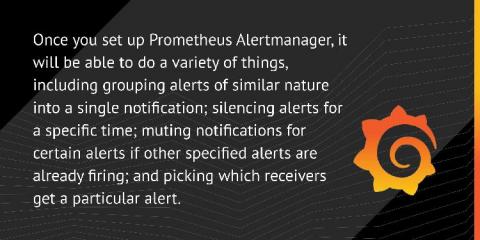
Step-by-step guide to setting up Prometheus Alertmanager with Slack, PagerDuty, and Gmail

In my previous blog post, “How to Explore Prometheus with Easy ‘Hello World’ Projects”, I described three projects that I used to get a better sense of what Prometheus can do. In this post, I’d like to share how I got more familiar with Prometheus Alertmanager and how I set up alert notifications for Slack, PagerDuty, and Gmail.