Operations | Monitoring | ITSM | DevOps | Cloud

The latest News and Information on Monitoring for Websites, Applications, APIs, Infrastructure, and other technologies.

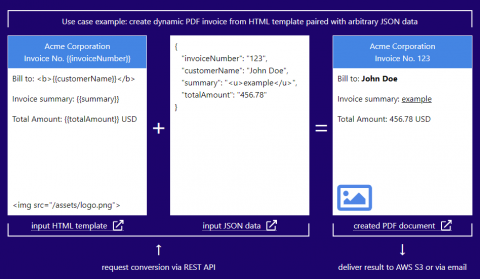
HTML to PDF API

We are releasing our HTML to PDF REST API to public preview: https://html2pdf.appbeat.io/ We are using this tool internally for generation of various PDF documents. It uses Chrome engine for HTML rendering and creates really nice looking documents. It supports synchronous and asynchronous operation where you can be notified about PDF conversion result via webhook.
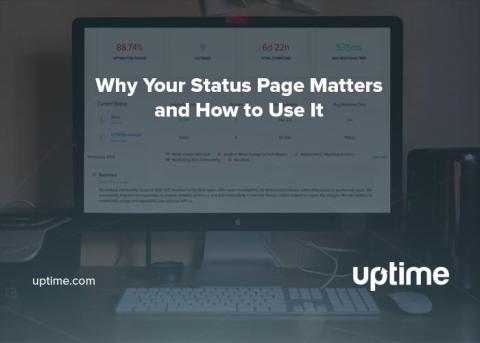

Why Your Status Page Matters and How to Use It

When an outage hits your service, everybody starts talking. Your engineers are talking about what caused the problem, and how to fix it; your management is asking about when it’ll be fixed; and your customers are telling the world that they’re not happy. But there’s an even more important conversation you should be having: communicating with your users about the issue.

They Aren't Pillars, They're Lenses

To have Observability is to have the ability to understand your system’s internal state based on signals and externally-visible output. Honeycomb’s approach to Observability is to strive toward this: every feature of the product attempts to move closer to a unified vision of figuring out what your system did, and how it got there.

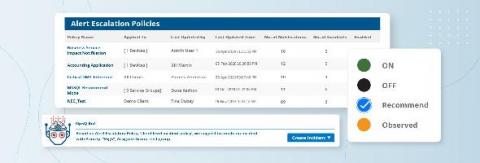
OpsQ Recommend Mode: Building Trust When Machines Call The Shots

Learn about OpsQ Recommend Mode, a new feature delivering auto-suggestions for alert escalation policies with OpsRamp’s machine learning algorithms. Recommend Mode builds upon Observed Mode by enabling one-click automation of suggested actions for alert escalation management. You can follow two approaches to use OpsQ Recommend Mode: First-Response and Alert Escalation.

Top tips to improve JavaScript performance for faster websites

Performance is one of the most important concerns when developing an application. All software developers should monitor and improve performance in every layer of the application. From the database to the server-side language, there are plenty of opportunities for performance issues to arise, and the front end is certainly no exception. So that’s why today we’re talking about JavaScript performance and how to improve it.

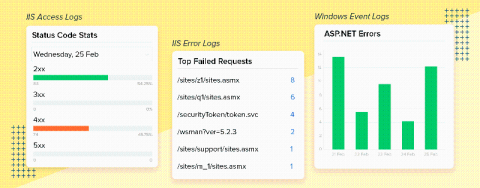
Three ways to debug IIS web server failures using logs

Unresponsive and slow pages are both terrible for any website. Even with the best user interface (UI), unresponsive and slow pages negatively affect the customer experience and the brand's reputation. Research from the Nielsen Norman Group has determined that the average user will leave a site after about 10 seconds of waiting for a page to load. If your page takes longer than a few seconds to load, it's time you check your IIS server logs.

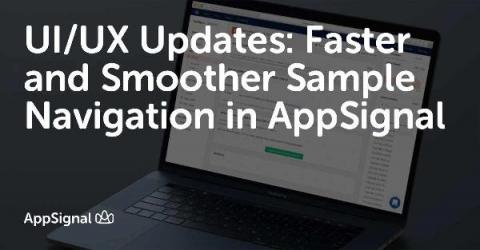
UI/UX Updates: Faster and Smoother Sample Navigation in AppSignal

Today, we’re bringing you an update of the performance/exceptions sample page. This update includes a number of improvements that will help you navigate and filter the available samples faster and more smoothly. We’re bringing these changes as an iteration of sample navigation improvements that we launched a while ago. We received valuable feedback from our users: the overlay made the navigation choppy instead of fluent.

How to configure Grafana as code

Grafana dashboards can do a lot, but do you know how much more you can get out of them by configuring them as code? That was the topic of a recent FOSDEM 2020 talk by Grafana software developer Malcolm Holmes and Julien Pivotto, an open source consultant at Inuits. In their presentation, the pair discussed Grafonnet (a Jsonnet library to generate Grafana dashboards), provided tips and tricks about how to use it efficiently, and explained how to fully manage your Grafana instances from code.

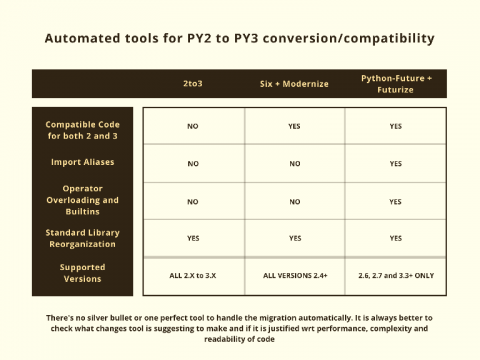
Automated Tools and Strategies to Help Migrate from Python 2 to 3

This article is a continuation of Part I (A comprehensive guide to migrating from Python 2(Legacy Python) to Python 3), which details the changes, and improvements in Python 3, and why they are essential. The rest of the article describes automated tools, strategies, and the role of testing in the migration from Python 2 to 3.